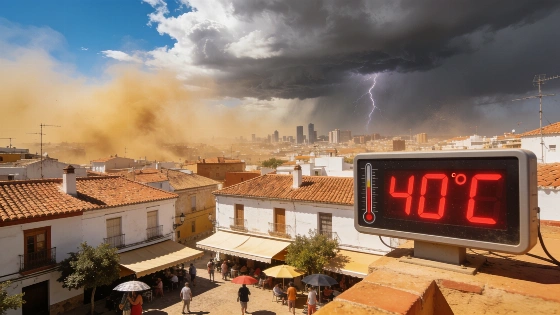
Spain is under a new heatwave alert, with AEMET forecasting highs above 40°C in several regions. Local storms and tropical nights are expected, especially in the south and east. Weather conditions will vary sharply across the country.
Spain is set for another surge of extreme weather, as the Agencia Estatal de Meteorología (AEMET) issues warnings for soaring temperatures and unstable conditions across much of the country. Wednesday brings a combination of intense heat, clear skies, and the risk of sudden storms, with the most severe impacts expected in the interior and southern regions.
Madrid will see temperatures climb to 40°C, accompanied by intervals of cloud and Saharan dust, known locally as calima. Winds will remain light, shifting to the southwest later in the day. In Andalusia, the situation is even more acute: maximums could reach 43°C, with the added threat of storms and hail in the eastern sierras. Fog banks are likely along the coast, and winds will strengthen from the west as the afternoon progresses.
Catalonia faces a mix of cloud, suspended dust, and a notable drop in temperatures in most areas, though highs could still reach 39°C. The south of Tarragona is at risk of afternoon storms, while coastal winds will ease by evening. Aragón will experience partially cloudy skies and calima, with temperatures peaking at 41°C. The Ibérica zaragozana may see a slight rise in heat, while the Ebro depression could cool slightly. Winds will be light to moderate, shifting between southeast and southwest depending on the area.
Asturias remains relatively stable, with clear or lightly clouded skies and the possibility of mist in the mountains. Temperatures will range from 15°C to 29°C, with a slight increase in the southern slopes of the Cordillera. Winds are expected to be light and variable inland, but easterly and northeasterly along the coast.
The Balearic and Canary Islands will see mostly clear skies, with some mid and high-level clouds, morning haze, and calima. Daytime temperatures will hover between 22°C and 35°C, with tropical or even torrid nights in some areas. In the Canaries, Lanzarote and Fuerteventura may experience more cloud cover, while Gran Canaria and Fuerteventura could see highs of 30°C. Strong northeast winds are forecast for certain zones overnight.
Galicia and the Comunidad Valenciana will have a mix of high and low clouds, with a chance of afternoon storms and showers. Temperatures are expected to range from 21°C to 38°C. Castilla y León and Castilla-La Mancha will also see mostly clear skies, with some mid and high clouds. Minimum temperatures will rise slightly in the south, while maximums could reach 42°C in some areas. Albacete and eastern Cuenca are at risk of strong storms and hail, with calima affecting visibility. Winds will be light and variable, intensifying during storms.
Ceuta and Melilla will experience mostly clear skies with high clouds in the morning and suspended dust. Westerly winds will ease by afternoon, and temperatures will remain steady, with highs of 38°C in Ceuta and 34°C in Melilla. In the Basque Country, Navarra, and La Rioja, clear skies will dominate, with temperatures between 14°C and 39°C. Winds will be light from the north inland and from the northeast along the coast.
These conditions follow a pattern of extreme weather that has become increasingly common in recent years. The combination of heatwaves, calima, and sudden storms has already prompted authorities to issue multiple alerts this summer. For context, similar weather events have previously led to severe storms and hail in southeast Spain, as detailed in recent coverage of weather warnings for Valencia and Murcia.
Spain's diverse geography means that weather impacts can vary sharply from region to region. While the south and interior face the highest temperatures and storm risks, coastal and northern areas may see milder conditions but are not immune to sudden changes. The presence of calima, driven by Saharan winds, can reduce air quality and visibility, particularly in the east and islands. AEMET continues to monitor the situation closely, urging residents to stay informed and take precautions during periods of extreme heat and potential storms. These weather patterns highlight the ongoing challenges posed by climate variability in Spain, affecting daily life, health, and infrastructure across the country.