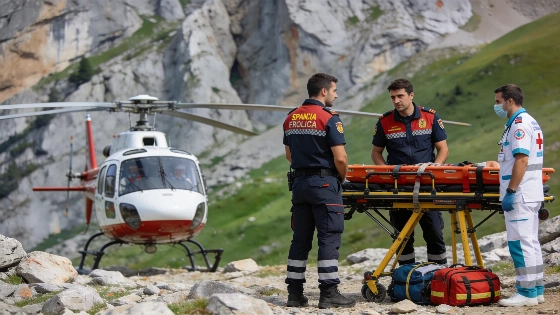
A Spanish Army corporal died during a night parachute exercise in Huesca. The incident adds to a series of recent military accidents. Investigations are ongoing as calls grow for improved safety protocols.
A Spanish Army corporal, Edgar Mallo Baena, lost his life during a night-time parachute exercise in Huesca, marking another serious incident in what has become a troubling period for the Spanish Armed Forces. The fatality occurred during the "Tormenta Alada 26" drill, a routine but high-risk operation involving paratroopers. Mallo Baena, who joined the Army in 2018 and served with the Batallón de Zapadores of the "Almogávares" VI Paratrooper Brigade, was recognized for his service both in Iraq and on national missions, having received several military honors.
The Army described the loss as a moment of "intense sadness," underscoring the emotional and operational impact within the ranks. This latest tragedy comes as the military faces scrutiny over a series of recent accidents. Just days earlier, the Asociación de Tropa y Marinería highlighted what it called a "black week" for the forces, with multiple deaths and injuries reported across different branches.
On June 16, in Ceuta, 23-year-old legionnaire Kevin Parra Mejía died during a routine physical training session with the Tercio "Duque de Alba" 2º de La Legión. He reportedly suffered a suspected cardiorespiratory arrest while exercising outside the barracks and could not be revived despite emergency intervention. The incident remains under investigation, with some accounts suggesting possible lapses in exercise management and emergency response.
That same day, a trainee at the Centro de Formación de Tropa nº 1 in Cáceres was hospitalized in critical condition after a suspected heatstroke during outdoor drills. The soldier was admitted to intensive care and intubated due to the severity of his condition. The association has called for a review of safety protocols, especially for physical activities conducted in high temperatures.
Further compounding the situation, on June 15, a senior Navy corporal was found dead at the Galeaza logistics accommodation in San Fernando (Cádiz). The cause of death is under judicial investigation. Just a day earlier, a VAMTAC military vehicle accident at the San Gregorio training ground in Zaragoza resulted in two soldiers being evacuated for medical care.
These incidents have intensified debate over the need to formally recognize military service as a high-risk profession, a legislative change that remains pending. The recent string of accidents has drawn attention to the adequacy of current safety measures and the urgency of reforms. The pattern of fatalities and injuries in the armed forces echoes broader concerns about operational risks, similar to those raised in other sectors. For example, a recent report on fatal road accidents in Castellón and Málaga highlighted the challenges emergency services face when responding to multiple critical incidents in a short period.
Spain's military, like its counterparts across Europe, regularly conducts demanding training exercises to maintain operational readiness. Parachute jumps, especially at night, are among the most hazardous activities, requiring precise coordination and strict adherence to safety protocols. The recent fatalities have prompted renewed calls from within the ranks and among advocacy groups for a comprehensive review of training standards, emergency preparedness, and the legal status of military personnel. As investigations continue, the focus remains on preventing further tragedies and ensuring the safety of those serving in the armed forces.