Isabel Díaz Ayuso and Santiago Abascal are warning voters against postal ballots. Their claims came hours after Pedro Sánchez called an early election for 29 November.
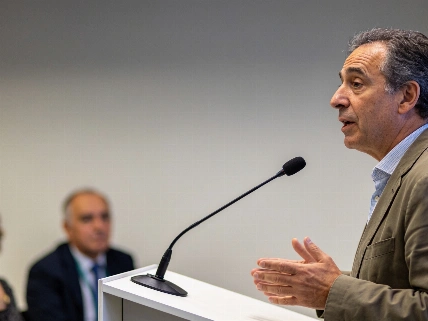
At a Nueva Economía Fórum event in Madrid, Isabel Díaz Ayuso urged voters to avoid postal ballots just minutes after Pedro Sánchez announced an early general election for 29 November. Santiago Abascal made a similar appeal in an interview on Antena 3. Neither leader presented evidence of electoral fraud in the statements reported here.
Both framed the campaign as likely to bring more confrontation and suspicion. Ayuso said people should vote in person where possible.
The snap election followed the government's parliamentary defeat over emergency housing measures intended to address evictions and speculation. Reuters and NPR identified that defeat as the immediate political trigger for Sánchez's decision.
Ayuso predicted an unusually aggressive campaign. She accused the prime minister of seeking an electoral advantage through what she described as new traps and political distractions. Her criticism extended beyond the voting process.
The president of the Community of Madrid cast the election as another battle between communism and freedom. She said her party was ready for what she called a wider political manoeuvre involving forces hostile to Spain and the country's liberal model.
Ayuso accused the Government of pursuing harmful policies since taking office. She said the current PSOE leadership had been captured by its alliance with nationalist forces and EH Bildu. She also argued that mass regularisation measures and the law affecting descendants of Spaniards could influence the result.
In her account, Sánchez uses elections as a tool of political propaganda and seeks to heighten tensions in the streets. El Independiente and Democrata described her references to possible alteraciones and a pucherazo as political warnings, not evidence of an established irregularity.
Distrust of postal voting extends beyond Vox's national leadership. Democrata also reported similar appeals from Vox representatives in the Balearic Islands, who urged voters to cast their ballots in person where possible to prevent what they portrayed as possible interference by Sánchez.
Abascal welcomed the election because Vox had demanded it for a long time. He rejected the idea that favourable opinion polls guaranteed victory. The Vox leader called the contest uncertain and told voters to distrust both surveys and the prime minister.
El Independiente separately reported that Abascal warned against postal voting and referred to the risk of electoral fraud. He presented no proof of fraud.
He also claimed that unnamed groups could try to stop Vox from addressing voters on equal terms. Abascal referred to what he called militias from the Playa del Trampolín and others. He said Spain would reach polling day with Ceuta "invaded" and Sánchez serving Moroccan interests.
His campaign priorities are national preference, deregulation and "remigration". He linked them to household finances, security, housing and public services such as healthcare.
Ceuta has featured in earlier security coverage, including an earlier Ceuta report. In this election debate, Abascal is using the city to make a broader argument about borders and national sovereignty.
José Luis Martínez-Almeida broke with Ayuso and Abascal's shared warning. The mayor of Madrid said Spaniards should use any legal voting method, including postal voting. He said the immediate duty was to participate now that an election had been called.
Xinhua reported that Sánchez planned to convene an extraordinary cabinet meeting to dissolve Parliament and set the election under Spain's established legal timetable. The 29 November date thus became a constitutional basic stage and the start of a campaign shaped by the government's housing defeat, pressure over affordability, evictions and protests.
The three figures have taken distinct positions. Ayuso and Abascal are turning postal ballots into a test of trust in the electoral process. Almeida is prioritising turnout regardless of the method.
No irregularity has been confirmed, and no institution has issued a finding against postal voting. The campaign has opened with two opposition figures asking citizens to treat one legal voting channel with suspicion, while another senior conservative voice urges them to use every lawful option.