Madrid’s president has ended all direct talks with opposition leaders. The move follows a luxury penthouse purchase by a public company. The decision comes just before a critical election year.
Madrid politics have taken a sharp turn after Isabel Díaz Ayuso, the region’s president, stopped meeting with opposition leaders. The move follows public anger over Planifica Madrid—a state-owned company—buying a €6 million penthouse for Ayuso’s use during government building renovations. With the 2027 regional elections approaching, the opposition now has no direct way to reach the president.
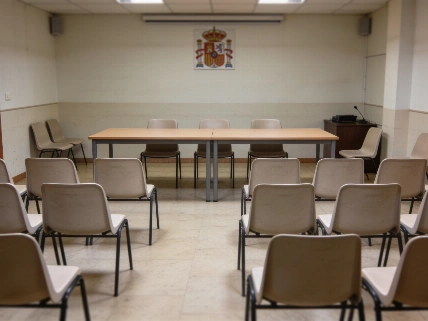
The break became public after a tense meeting in September 2025. Mar Espinar, spokesperson for the PSOE in the Assembly, pressed Ayuso about her partner Alberto González Amador’s alleged tax fraud and their living situation. Ayuso ended the meeting abruptly, declaring it over. No further meetings have been scheduled since, ending a practice Ayuso had started to set herself apart from Prime Minister Pedro Sánchez.
After the penthouse scandal erupted, the property was put back on the market with a starting price of approximately €6.69 million, and offers are being accepted until September 7, 2026.
Government spokesperson Miguel Ángel García Martín, who also leads Planifica Madrid, defended the decision, saying opposition leaders used the meetings to provoke and insult instead of discussing policy. According to those present, García Martín was especially vocal during the exchange with Espinar. The government now considers the meetings pointless.
Opposition parties see this as a deliberate shutout. Más Madrid, led by Manuela Bergerot, calls it “sectarian closure” and points out that, despite frequent tension, the meetings sometimes led to practical fixes—like when Ayuso responded to transport problems by adding express buses. PSOE claims Ayuso now consults only with her chief of staff and real estate contacts, saying she has “destroyed the last vestige of institutional dialogue.” Vox also criticizes the move, arguing the ruling party is too distracted by its own scandals to address Madrid’s real issues.
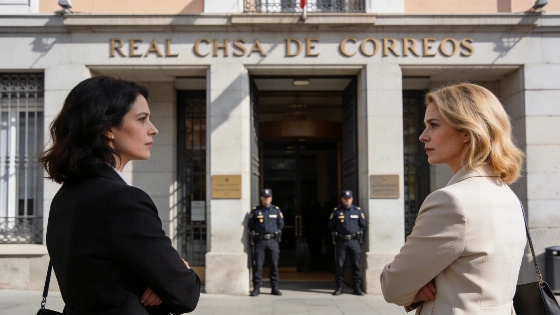
The penthouse purchase remains at the center of the dispute. In April, Planifica Madrid bought a 485-square-meter penthouse in Chamberí, one of Madrid’s most expensive neighborhoods, for over €6 million. The property was meant for Ayuso’s use during the renovation of the Real Casa de Correos. After the deal became public and drew criticism, the company quickly put the penthouse back up for sale. The episode has dominated headlines and continues to fuel political attacks.
Reports from Spanish and international media confirm that the penthouse was purchased by Planifica Madrid on April 14, 2026, for €6.3 million, with a total area of about 481–485 m² and a terrace of approximately 200 m². The transaction was not immediately visible in budget documentation or on the transparency portal, which has intensified criticism from opposition parties regarding the lack of transparency.
Since January, the government has kept the freeze on opposition meetings, cutting off one of the few ways rival parties could question Ayuso directly about the penthouse and other matters. Ayuso has said she ended the meetings because of personal insults, not political criticism, and insists she should be judged on her work for Madrid’s residents. Her relationship with Espinar is now so strained that they no longer greet each other in the Assembly. Parliamentary sessions have become heated, with the penthouse scandal adding to the tension.
Despite the lack of private talks, the opposition will soon face Ayuso again in the Assembly. The upcoming regional debate will bring Ayuso, Bergerot, Espinar, and Vox’s Isabel Pérez Moñino together in public, with the penthouse affair certain to dominate discussion. As reported earlier, the scandal has already left Ayuso isolated within her own party and exposed deep divisions in Madrid’s political leadership.
This episode highlights how fragile institutional dialogue has become in Madrid’s government. Ayuso’s decision to cut off direct talks with the opposition, especially in the middle of a luxury real estate scandal, marks a step away from transparency and shared problem-solving. With elections approaching, the city’s main issues will now be debated in the Assembly’s charged atmosphere, with little chance for consensus. The government’s defensive stance and the opposition’s exclusion signal a new phase of polarization, where personal disputes and unresolved scandals overshadow public concerns.