Barcelona’s July calendar is packed with Pride concerts, a major demonstration, and neighborhood festivals. Poble-sec’s community events and the Soundit Festival in El Prat add to the city’s vibrant cultural scene.
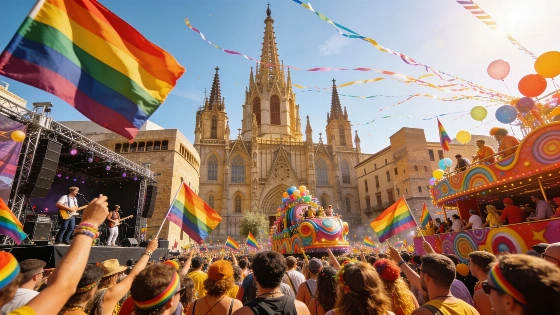
Barcelona’s summer agenda intensifies this weekend as the city becomes a focal point for Pride celebrations, neighborhood festivities, and new music festivals. The capital’s Pride events, now drawing larger crowds each year, coincide with the Poble-sec district’s traditional celebrations and the launch of the Soundit Festival in El Prat de Llobregat. This convergence of events highlights the city’s commitment to both inclusivity and local culture, offering residents and visitors a diverse range of free and ticketed activities.
The Pride Barcelona program opened with a speech by María Peláe and features two main stages at Plaça Universitat and Passeig Lluís Companys. Friday’s lineup includes Catalan artists Julieta and Luna Ki, alongside the British dance group Clean Bandit. On Saturday, performances by Ouineta, Roser, and La Terremoto de Alcorcón follow the central Pride march, which starts at 18:00 and moves along Gran Via to the Arc de Triomf. For those seeking late-night entertainment, Sala Apolo hosts its signature Churros Con Chocolate party on both Friday and Saturday from midnight.
Poble-sec, known for its strong community spirit, launches its festivities on Friday at 20:00 with the Toc a la Festa parade in the Tres Xemeneies gardens. From 22:30 until 3:00, local castellers have organized concerts featuring acts like Fades and Las hijas de la Cumbia. Saturday’s schedule includes a flamenco night at Plaça del Sortidor with Els Nois del Poble-sec at 22:00, and a groove and funk party at Plaça Santa Madrona, where club Salvadiscos marks its fifth anniversary until 2:00.
The Soundit Festival, which began as a Saturday afternoon event at the Monumental bullring, has evolved into a two-day festival at Parc Nou in El Prat de Llobregat. This year’s edition offers four intimate stages focused on sound quality, set in a natural environment between the airport and the Delta. With lower ticket prices than many other festivals (75 euros for a pass, 45 euros for a day ticket), Friday’s highlights include Russian DJ Nina Kraviz at 23:00 and Madrid’s veteran DJ Óscar Mulero at 02:00. Saturday features the Jack in the Box set by 2manydjs at midnight, an immersive session by Barcelona’s John Talabot at 22:00, and New York’s Honey Dijon at 02:00.
In Nou Barris, the Desvarío festival—part of the Grec program—continues through Sunday at the district’s main square. The lineup features artists who blend flamenco with other genres: Antonio Fernández and Pedro de Dios will mix flamenco and Mississippi-style blues with electric guitar, bass, and drums at 21:30. Later, Jesús Méndez brings traditional flamenco vocals. Saturday’s program includes soprano Mariví Blasco and guitarist Pedro Barragán at 21:30, followed by a dance performance from Israel Galván, recipient of the National Dance Award, at 23:00.
Barcelona’s approach to summer events stands out for its blend of activism, local tradition, and musical innovation. The city’s Pride celebrations have grown to rival those of other major European capitals, while neighborhood festivals like those in Poble-sec maintain a strong sense of community. The emergence of new festivals such as Soundit reflects a broader trend toward more accessible and diverse cultural offerings. This dynamic is reminiscent of how local initiatives can reshape urban life, as seen in other Spanish cities where grassroots movements have influenced public events—an issue that has also sparked debate in political circles, as highlighted during recent mayoral primaries in Madrid (see coverage of internal party challenges in Madrid). For Barcelona, the current wave of festivities underscores the city’s evolving identity as both a hub for progressive causes and a stronghold of neighborhood solidarity.
For context, Barcelona’s Pride has become one of the largest in southern Europe, attracting tens of thousands of participants annually. The city’s tradition of neighborhood festivals, or “festes majors,” dates back centuries and remains a key part of local culture. Events like Soundit are part of a growing movement toward smaller, more affordable festivals that prioritize quality and community engagement over scale. These developments reflect broader shifts in how urban spaces are used for cultural expression and social activism, reinforcing Barcelona’s reputation as a city where tradition and innovation coexist.