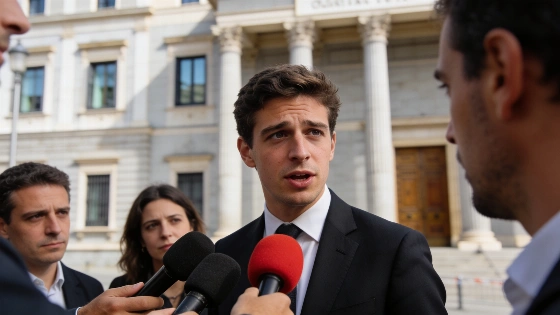
Jordan Bardella denies messages attributed to him by Mediapart. Emmanuel Macron demanded an immediate explanation during his state visit to Spain.
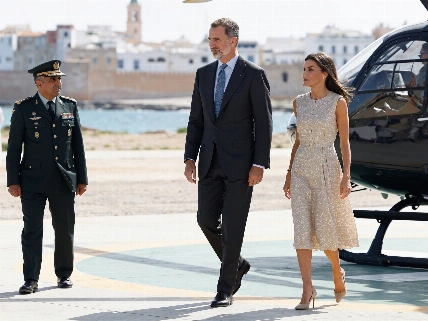
During Emmanuel Macron's two-day state visit to Spain, the French president demanded an immediate explanation from Jordan Bardella. Macron called the reported messages extremely serious and unacceptable. Bardella denies writing them.
The dispute now puts Agrupación Nacional under direct scrutiny. The party has spent years trying to distance itself from its past. Bardella says the allegations are part of an attempt to destroy his political career.
Macron said France could never tolerate antisemitic statements. He also condemned the inflammatory language Agrupación Nacional used against Mediapart. Attacks on political opponents and media organisations, he said, fuel escalation. Reuters and Le Monde reported that Macron directly called on Bardella to clarify the allegations.
Mediapart says it examined dozens of private messages dating from 2013 to 2015. The outlet has not disclosed how it obtained the material or in what format it received the messages.
Bardella answered Macron on X. He pointed to his own actions after 7 October 2023. Bardella said he had walked through the streets of Paris and travelled to Israel, while Macron had not done so. The reply moved the argument away from the alleged messages and toward Bardella's current record on antisemitism and the conflict involving Israel and Hamás.
The allegations concern private written exchanges that Mediapart says it independently authenticated. The outlet has not explained how it obtained the material. It has also not specified the format of the messages or detailed the method used to verify them.
Mediapart attributed several claims to Bardella. They involved alleged Jewish monopolies in banking, alleged control of financial institutions and Israeli dominance. BBC, France 24 and The New York Times described the reported content as antisemitic and conspiratorial.
The missing details matter. Mediapart has presented the exchanges as evidence. Bardella has categorically denied authorship and announced legal action for defamation. Reuters and JPost reported that he called the publication false and took the dispute into the legal sphere.
On Tuesday, Bardella called the episode the beginning of an all-out war and an attempt to destabilise the presidential campaign. Marine Le Pen stood beside him and expressed complete confidence in her political ally. Reuters, AP and Mediapart also reported her support.
The allegations are especially sensitive because Bardella has previously cultivated an anti-Islamist and pro-Israel image. JTA noted that this public positioning has made the reported messages harder for the French far right to dismiss as a purely historical controversy.
The alleged messages date from a period when Bardella was still a teenager and a member of the Front National, the predecessor of Agrupación Nacional. Jean-Marie Le Pen, Marine Le Pen's father, founded the party. He repeatedly made Holocaust-denying statements and was convicted several times for incitement to hatred before his death in 2025.
Bardella's earlier remarks about Jean-Marie Le Pen have added another layer to the dispute. In 2023, he said he did not believe the former party founder was antisemitic. He later called that answer clumsy. In May 2024, Bardella acknowledged that Jean-Marie Le Pen had made statements that were unequivocally antisemitic.
The controversy hits a carefully built political strategy. Agrupación Nacional has sought Jewish voters in recent years. It has presented itself as a barrier against Islamist extremism in France. Marine Le Pen has also worked to separate the party from her father's past.
Researchers and critics call that effort "desmonisation". The term refers to Marine Le Pen's expulsion of her father from the Front National in 2015 and the party's renaming in 2018.
The timing matters. Le Pen has said she would appoint Bardella prime minister if she wins the presidential election next spring. A minister in Israel's government defended Bardella as one of Europe's clearest voices against Hamás. The minister cited Bardella's appearance in Jerusalem against antisemitism and accused the French left of attacking his reputation.
That support reaches beyond France's domestic debate. It also links the controversy to Bardella's relationships with parts of the Israeli right.
The dispute also came during Macron's wider engagement with Spanish public life. His visit included the cultural tribute described in Macron's Madrid tribute. A state visit meant to reinforce France and Spain's political and cultural ties also gave Macron a platform to draw a hard line against a rising French opposition figure.
The issue is unresolved.
Bardella's denial does not settle where the messages came from. Mediapart's account does not by itself establish authorship without the missing verification details. The allegations strike at the historical issue Agrupación Nacional has tried to manage through "desmonisation".
Macron's intervention has turned a media report into a test of whether the party can claim a break with its past. Its leading figures remain linked to that history. The political response will be judged by the evidence Bardella and Mediapart provide.