A British tourist drowned after jumping from a ferry near Cambrils during a drunken challenge with his brother. The incident comes amid a spike in beach fatalities across Catalonia this summer. Emergency services responded but could not save the man.
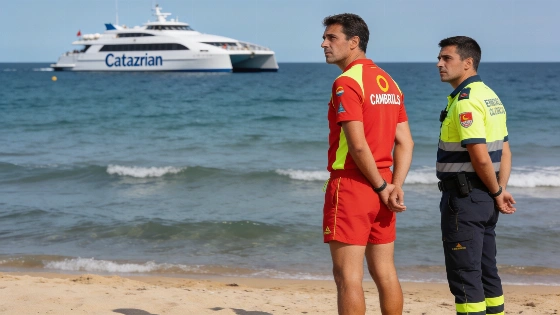
A holiday dare between two British brothers ended in tragedy off the coast between Cambrils and Salou. Both men, on vacation with their family, jumped from a catamaran ferry after drinking heavily, racing each other to the Ponent beach bar. Only one made it to shore.
Police say the brothers, aged 45 and 43, had been drinking throughout the ferry ride. The captain of the Dorimar catamaran, which runs between Cambrils and Salou, eventually cut them off. Ignoring warnings, the brothers climbed out a window as the boat neared land and tried to swim to the beach bar, each hoping to win the dare.
According to the Spanish Maritime Safety Agency, alcohol is a contributing factor in over 30% of drowning incidents on Spanish coasts each summer.
Their parents and other relatives watched from the boat as the situation quickly turned serious. Crew and family raised the alarm when one brother began to struggle in the water. Emergency services got the call at 18:41 and sent three ambulances and a team of psychologists to help the family. Despite their efforts, the 45-year-old man drowned before he could be rescued.
This is not an isolated case. Since June 15, when the summer season began, 26 people have drowned on Catalonia’s beaches—already more than the 20 deaths recorded for all of 2025. The Real Federación Española de Salvamento y Socorrismo reports that this is the deadliest summer since records began in 2015, with 239 drownings nationwide between June and August. That same weekend, two more men died in separate incidents on the Girona coast: a 78-year-old in Lloret de Mar and a 69-year-old French tourist in Colera, neither of whom could be revived by emergency teams.
These deaths are part of a wider pattern. The rise in drownings has led to renewed scrutiny of safety rules on Spanish beaches and boats. Alcohol, lack of supervision, and overconfidence in open water are common factors in many of these cases. Authorities now routinely send both medical and psychological support to such incidents, reflecting the growing scale of the problem.
The Spanish Ministry of Health has recently launched a nationwide campaign urging beachgoers to avoid swimming after consuming alcohol, citing a significant increase in preventable drownings over the past three years. The campaign includes multilingual warnings and enhanced lifeguard patrols in high-risk areas.
While the Cambrils case is dramatic, it is just one example of a broader trend of preventable deaths along Spain’s coast. The impact goes beyond the victims, affecting families, emergency workers, and the reputation of local tourism. As seen in other recent tragedies, calls for stricter enforcement and better public awareness are growing.
Spain’s beaches attract millions every summer, but the spike in drownings shows a dangerous gap between leisure and responsibility. The Cambrils incident is a clear warning: mixing alcohol and bravado in open water can be fatal. Without stronger action from authorities, operators, and the public, the number of deaths is likely to rise.