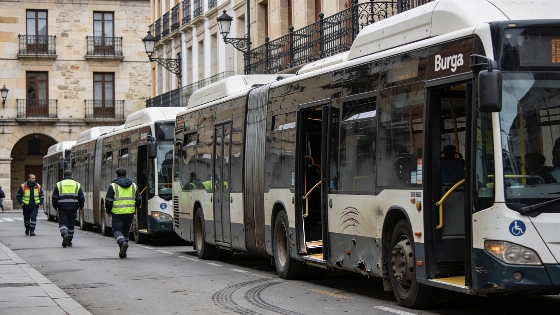
Burgos plans to purchase 40 buses loaned by Madrid after a fire destroyed half its fleet. City officials say the vehicles are in better shape than many older ones. Buying new buses would be far more expensive.
Burgos is negotiating to acquire 40 articulated buses originally loaned by Madrid, following the massive fire in April that wiped out nearly half of the city's public transport fleet. The move comes as local officials weigh the high cost of replacing the destroyed vehicles with new ones, compared to keeping the second-hand buses that have already proven essential in restoring service.
The fire, which broke out on the night of April 21 at the municipal depot, destroyed 39 buses and caused an estimated €20 million in damages. One worker was hospitalized after inhaling toxic smoke while attempting to save vehicles from the flames. The incident left Burgos, a city of 180,000, scrambling to maintain public transport, with several lines forced to increase intervals due to the sudden shortage of buses.
Madrid responded quickly to Burgos's request for help, sending 40 reserve buses to cover the gap. According to city officials led by Cristina Ayala, these vehicles are in good condition—some even outperforming the oldest units in Burgos's fleet. The municipality now aims to make the arrangement permanent by purchasing the buses, arguing that the cost will be significantly lower than buying new ones. However, the final price is still under discussion, and Madrid's urban planning department notes that no formal offer has yet been received from Burgos.
In addition to the immediate transport crisis, Burgos authorities have had to allocate over €6 million to demolish and rebuild the damaged depot. The city’s fleet, which stood at 78 buses before the fire, now numbers 94 thanks to the Madrid loan and the replacement of some rented vehicles. Notably, 21 of the destroyed buses were under a rental agreement, with 15 already replaced by the leasing company. The rapid response and cooperation between cities helped Burgos avoid a deeper disruption to daily life and public mobility.
Such intercity support is not unique in Spain, where municipalities often collaborate in times of crisis. For example, recent reports have highlighted how emergency situations can strain local infrastructure and require swift action, as seen in Ceuta's efforts to manage a surge in migrant arrivals. In the case of Burgos, the focus remains on securing a stable, cost-effective solution for its public transport network while recovery efforts continue at the depot site.
Public transport is a critical service for Spanish cities, especially those with significant commuter populations. The Burgos fire underscores the vulnerability of municipal fleets to unexpected disasters and the importance of contingency planning. As negotiations proceed, the outcome will likely influence how other cities approach fleet renewal and emergency preparedness in the future.