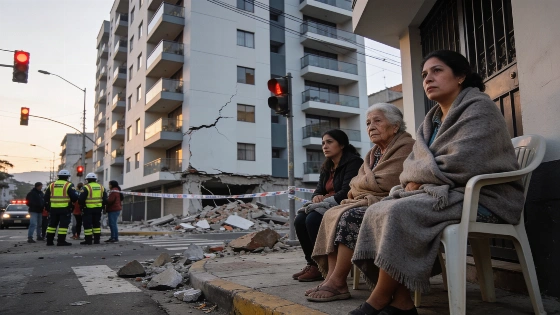
A powerful earthquake in Cali has left at least 95 dead and hundreds injured. Survivors spent the night outside, fearing aftershocks. Many buildings collapsed, and basic services remain disrupted.
In Cali, the aftermath of a devastating earthquake has forced residents to spend the night outdoors, gripped by fear of further tremors and desperate for news of missing relatives. The disaster, which struck early in the morning, has left at least 95 people dead in the city, according to the latest figures from Mayor Alejandro Eder. Emergency services continue to search for survivors, with 239 people still believed to be trapped under the rubble and 56 buildings reported collapsed.
One of those affected is Alicia, a 64-year-old Colombian woman who has lived in Spain for 25 years and was visiting her mother in Cali when the quake hit. She described to EL MUNDO how the shaking began just as she was about to leave her mother's sixth-floor apartment. Initially thinking she was dizzy, Alicia soon realized the severity as furniture shifted, drawers flew open, and cracks appeared in the walls. A section of the wall even broke off, while her mother was in the bathroom. The building lost power and internet access immediately after the tremor, leaving residents isolated and anxious.
Security staff quickly moved through the building to assist elderly residents, temporarily restoring the elevator to help them evacuate. Outside, neighbors gathered with chairs, sharing coffee and infusions as they waited for updates. Many had been caught off guard, still in their pajamas, while others rushed to check on loved ones. The lack of electricity and water forced Alicia and her mother to seek shelter at a nearby friend's home, as returning to their own apartment was impossible. In some areas, entire buildings collapsed, including one with a rooftop pool, while traffic police blocked off streets affected by debris and malfunctioning traffic lights.
Supermarkets struggled to open due to structural damage, and water quickly sold out in local shops. Alicia recounted how her neighbor drove her to buy soft drinks, as she was too shaken to drive herself. By the afternoon, some normalcy returned, but the fear of aftershocks kept many from sleeping indoors. The main concern now is the fate of those still trapped beneath the ruins, as families and neighbors anxiously await news. The search for safe shelter continues, with many residents unsure where to go next.
This earthquake in Cali follows a series of seismic events in Colombia in recent years. For context, a previous major quake in the region prompted emergency evacuations in Bogotá and was felt across several major cities, as reported in a related incident covered by RUSSPAIN. Such disasters highlight the ongoing vulnerability of urban areas in Colombia to seismic risks, especially in densely populated neighborhoods with older residential buildings.
Colombia sits on the Pacific Ring of Fire, making it prone to earthquakes. Cali, as one of the country's largest cities, faces particular challenges due to its rapid urban growth and varied building standards. In the wake of this latest disaster, local authorities are focusing on rescue operations and restoring essential services. The situation remains fluid, with the number of casualties and missing likely to change as search efforts continue. For residents, the immediate priority is safety and reconnecting with family members, while the city begins to assess the full scale of the damage and the long road to recovery.