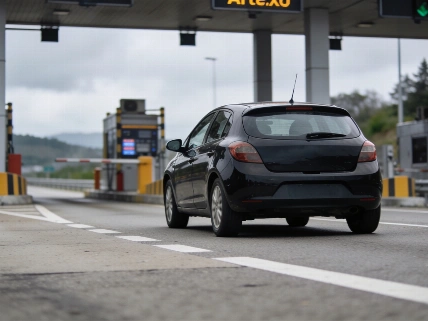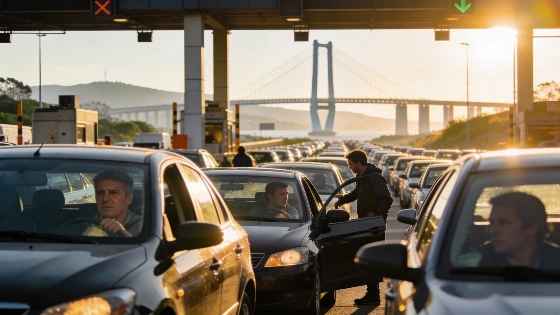
Hundreds of drivers demand refunds for paid traffic jams on AP-9 in Galicia. The En-Colectivo association is demanding that Audasa disclose the list of those affected by traffic jams on the AP-9. A court has ordered refunds in 81 cases, but the company is withholding information. The issue affects hundreds of Galicia residents.
A conflict is escalating in Galicia over refunds for paid trips on the AP-9 section during extensive roadworks on the Rande Bridge. The En-Colectivo association, which unites consumers and users from Vigo, has filed a lawsuit demanding that Audasa disclose the full list of drivers affected by 81 officially recognized cases of congestion, delays, and detours between 2015 and 2018. The Supreme Court has already ruled that charging the full toll during these periods was illegal, yet Audasa still has not provided data on those affected, making it impossible to enforce the refund decision.
Legal pressure on Audasa
According to En-Colectivo representatives, Audasa holds all the necessary transaction records but is in no hurry to cooperate. After the Supreme Court's decision, the association gave Audasa six months to voluntarily release the data, but during that time the company took no action and continues to challenge the ruling in the Constitutional Court, citing violation of its right to legal protection. En-Colectivo is now seeking a court order to oblige Audasa to hand over the list of all drivers who paid tolls during the congestion periods, to ensure that every affected person receives a refund.
Scale of the problem and public reaction
The lawsuit was initially filed in 2019 by a group of 14 people, but according to the association, it involves hundreds of drivers who were stuck in multi-kilometer traffic jams and forced to pay for poor service. To get a refund, either each individual must independently find and confirm their payments for 81 incidents, or Audasa must provide a complete registry of transactions. En-Colectivo insists that only the second option will allow everyone to get their money back without exception. The organization’s website provides information for potential new claimants and is collecting signatures to abolish tolls on the AP-9.
Economy and political background
AP-9 is a key transport artery in Galicia, linking Tui and Ferrol and passing through the region's largest cities. According to an audit, traffic on the highway grew by 4.7% in 2025, while Audasa's profits rose by 11.7%, reaching €100.81 million. Despite this, the fare for the 215-kilometer route already exceeds €28, and toll abolition has been postponed until 2048 due to decisions by previous governments. The issue of transferring AP-9 under the control of the autonomous community is being discussed in parliament, but the process is slow, sparking discontent among drivers.
Protests and the European aspect
In February, residents of Vigo and representatives of all regional parliamentary parties staged a protest demanding the abolition of tolls and the return of the highway to state control. En-Colectivo also filed a complaint with the European Commission regarding the extension of Audasa’s concession without competition, which was recognized as a violation of European regulations. The European Commission sent Spain a reasoned opinion, raising the threat of legal proceedings at the EU level. Against this backdrop and despite public subsidies, AP-9 toll rates continue to rise, and dissatisfaction among residents is only growing.
Transport issues and housing affordability problems in Spain are becoming increasingly apparent. For example, in Barcelona, Moroccan migrants were recently forced to live in a former butcher's shop due to a shortage of apartments, reflecting the scale of social tension in the country. For more on this case, see the article about the forced relocation of migrants in Barcelona.