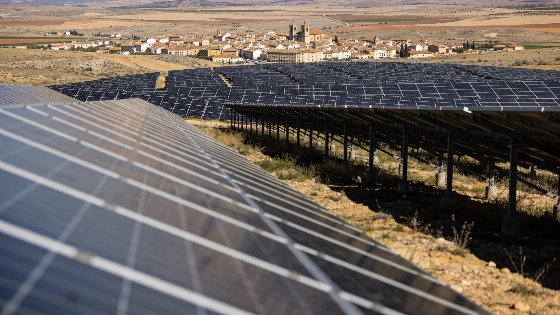
Castilla y León says its new levy on large solar parks is intended to keep more economic benefit in host areas. Rooftop systems and plants under 50,000 square metres are exempt; local investment agreements can cut the tax by 30%.
The Junta cannot yet say how much the expanded environmental levy will bring into the regional budget. Its spokesman, Carlos Fernández Carriedo, says the aim is to ensure electricity generation benefits the areas where it takes place.
The tax extends Castilla y León’s environmental-impact levy, the region’s only tax of its own, to large photovoltaic parks. The Junta has defended the measure amid criticism from the solar industry and the Spanish government. UNEF has called it unjustified and designed to raise revenue.
Rooftop installations are exempt, along with self-consumption systems for homes or industry. So are plants covering less than 50,000 square metres. Above that threshold, the tax rises progressively, reaching its maximum rate for installations of 500 hectares or more.
Companies may qualify for a 30% tax reduction if they reach an agreement with local institutions or entities to commit to investment or activities in the area. The Junta presents the discount as an incentive for firms to make agreements with municipalities and keep some of the wealth linked to power generation in the area.
Those exemptions and discounts also leave expected revenue uncertain. Companies can enter into new agreements with local areas during the financial year, reducing the amount they pay. That makes the final take depend in part on whether firms use the incentive.
The policy has prompted questions about the Junta’s position on reducing taxes and whether the levy could deter new solar investment. Carriedo argues it should instead encourage companies to commit to the territory. A separate Cáritas housing-cost study examined another source of financial pressure for households in the region; it did not assess the solar tax.
Municipalities already receive income from solar installations through their own taxes. The Junta says its change is intended to increase the share of those resources that returns to the areas where the electricity is generated.