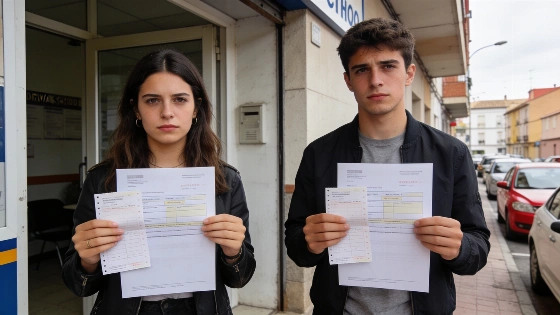
Young residents of Castilla y León could receive up to €900 to help pay for their driving licence. The scheme, set to open in September, comes with income-based tiers and a three-year residency requirement. Payments, however, are not expected until 2027.
Getting a driving licence in Castilla y León is about to get cheaper for many young people, at least in theory. The regional government has announced a subsidy of up to €900 for residents aged 18 to 30. But anyone interested will need to be patient: applications aren’t open yet, and the first payments aren’t expected until 2027.
The subsidy, set out in the newly published Orden MTD/830/2026 and confirmed in the official regional bulletin, isn’t a flat amount. How much you get depends on your household income. Those with the lowest incomes can receive the full €900, while higher earners may get as little as €450. The calculation uses Spain’s public income index (IPREM) and looks at both general and savings taxable bases from the most recent tax year. Applicants must show five years of continuous registration in Castilla y León and commit to staying for three more, according to the official bulletin and regional media reports.
"The subsidy covers driving school, theory and practical lessons, and official exam fees, but does not include medical or psychotechnical tests."
Democrata
For many, the promise of up to €900 is a big help. In much of rural Spain, driving is essential for work and daily life, since public transport is limited and jobs often require mobility. But there are limits: the subsidy can’t exceed the actual cost of getting the licence, and it only applies to the B category—no motorcycles, trucks, or buses. Eligible expenses include driving school fees, lessons, exam charges, and traffic authority fees. Medical and psychotechnical tests are not covered, as reported by ÁvilaRed and other local sources.
Applicants from large families get a break: their income threshold is reduced by 20%, or 30% for those in the special category, making it easier to qualify for the higher subsidy. If there’s a tie, the earliest complete application wins. The process is competitive, with priority for those with the lowest incomes, and the final number of recipients will depend on the budget set in the upcoming call. Official documents say the selection process is meant to favor those with the greatest financial need.
Timing matters. The government expects to open applications in September, with a deadline at the end of 2026. But the money won’t arrive until 2027, after all applications are reviewed. Anyone hoping for quick help will need to plan ahead—and may miss out if the budget runs out before their turn.
"The regulatory base for the subsidy entered into force at the end of August 2026, but applications are not yet open. The official call is expected in September 2026, with the first payments forecast for 2027."
OkDiario / Talent24h
There’s another catch: you have to get your licence within the period set by the call. If you pass your exams too early or too late, you could miss out. All training must be done at an officially recognized driving school in Castilla y León, and every expense must be backed up with invoices and proof of payment. The process is digital, and there’s a ten-day window to fix any missing paperwork.
According to the regional government, about 27,000 driving licences are issued each year in Castilla y León, with around 70% going to people aged 18 to 30. That’s roughly 20,000 potential applicants. But as Facale, the region’s driving school association, points out, delays in practical exam scheduling—sometimes up to four months—could make things harder for those trying to fit within the subsidy’s eligibility window.
The measure is meant to support youth employment and rural mobility, but the reality is more complicated. The long wait for payment, strict residency rules, and competitive selection mean only the most persistent and organized applicants will benefit. For many, the process may feel more like a bureaucratic obstacle course than real help. Still, for those who manage to get through, the money could be the difference between getting a licence or not in a region where driving is often essential for work, study, and daily life.