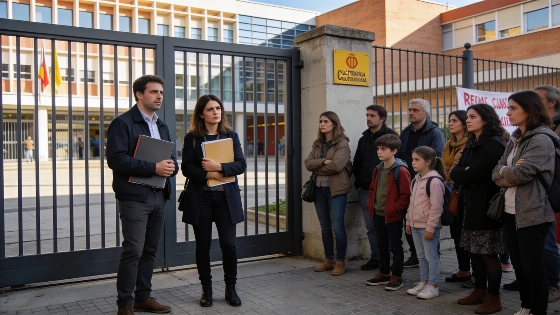
Catalonia’s education department urged unions to pause strike plans, but union leaders insist the September 8 walkout will proceed. The government’s proposed reforms failed to convince teachers, setting the stage for disruption as schools reopen.
The conflict between Catalonia’s education authorities and teaching unions has reached a standstill. Despite a last-minute appeal from Education Minister Esther Niubó to call off the strike, union leaders say the walkout planned for the first day of the new school year—September 8—will go ahead. The government’s offer of a new working agenda and gradual reforms did not convince the main unions, who argue the measures are not enough. The strike date was chosen to coincide with the start of the academic year, aiming for maximum impact on schools and families.
Niubó’s request for a "pause" was quickly dismissed. Ustec, the largest teachers’ union in the region, said the strike was "already decided" and warned it would likely be the first of several actions this year. The CGT and Intersindical unions agreed, criticizing the government for missing repeated chances to address core demands before the school year began. According to RTVE and La Razón, talks between the government and unions had already broken down over the summer, with union representatives saying their concerns were ignored in favor of discussions with school directors and parent associations.
The Catalan government has agreed to hire 1,830 new staff and open 500 new 'welcome classrooms', but even officials admit not all schools will benefit from these resources this year.
At the center of the dispute is frustration over what unions call chronic underfunding and a lack of resources. The education department pointed to recent agreements with CC OO, UGT, and Professors of Secondary Education, which include hiring 1,830 new staff, opening 500 new welcome classrooms, and adding school nurses and administrative managers. Union leaders, however, say these steps are not enough and are unevenly distributed. Even Niubó admitted that not all schools would benefit from the new resources this year, but urged unions to show "trust" and join further talks. The government says these changes are progress, but unions want broader reforms: smaller class sizes, more support for inclusive education, and stronger protection for the Catalan language in schools.
Talks stalled over the summer, as the government shifted its focus to meetings with school leaders and parent groups while teachers were on holiday. This left the strike call—initiated by the Asamblea Educativa de Cataluña and carried by Ustec, CGT, and Intersindical—unchallenged as the new term approached. Union representatives say the government’s refusal to present a full proposal before July made the strike unavoidable. As reported by El País, unions see the government’s approach as fragmented and not enough to address deeper problems in the education sector.
The Asamblea Educativa de Cataluña, though not a formal union, has played a key role in shaping the protest. Its representatives attended Thursday’s meeting and said a detailed list of demands would be discussed in school assemblies on September 8. The most urgent issues will be prioritized and formally presented to the education department later in the month.
The strike in Catalonia is part of a broader wave of education sector protests across Spain, with several autonomous communities also planning walkouts as the school year begins. However, Catalonia stands out for the intensity of the conflict, as unions have warned that this may be only the first in a series of actions if their demands are not met.
The government’s strategy of signing partial deals with some unions while leaving others out has deepened the divide. Niubó said unions would not be able to join existing agreements, but invited them to take part in a new round of talks. For now, unions have rejected that offer.
This standoff is not unique to Catalonia. Across Spain, public sector strikes have become common, as seen in Barcelona’s library sector where staff walkouts have forced closures, as reported earlier. The pattern is familiar: piecemeal reforms and last-minute talks rarely satisfy frontline workers facing ongoing pressures.
The current conflict shows a government caught between small improvements and the larger changes teachers are demanding. The refusal to delay the strike points to a loss of trust in official promises and a willingness among teachers to escalate their campaign. With the school year about to start under the threat of industrial action, Catalonia’s education system faces another year of uncertainty. Unless both sides move beyond tactical offers and fixed positions, a stable academic year seems unlikely.