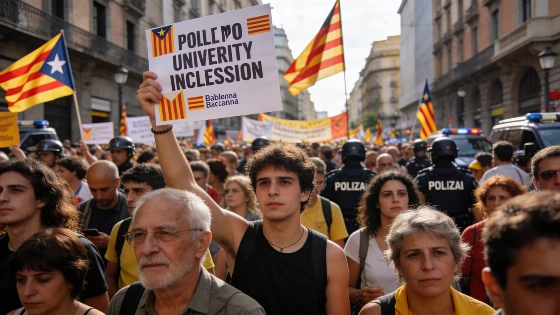
Catalonia’s Diada became a battleground over the future of independence. Traditional parties and left-wing groups united to counter Aliança Catalana’s growing influence, as tensions flared in Barcelona and the far right gained ground.
This year’s Diada in Barcelona exposed a growing split over Catalonia’s future. The rise of Aliança Catalana, a far-right separatist party, pushed traditional independence groups and left-leaning parties to set aside old disputes and focus on a new rival. For the first time, the basic concern was not Madrid but a party now leading the pro-independence polls.
Aliança Catalana’s momentum has unsettled Catalan politics. Led by Sílvia Orriols, the party holds just two seats in parliament, but recent polls suggest it could soon top the separatist bloc and even challenge the PSC. Its focus on immigration and security is starting to dominate the conversation, alarming established independence parties and non-separatist groups. A Sigma Dos poll for El Mundo in early September 2026 projected that Aliança Catalana could win 25-28 seats and 16.7% of the vote, a sharp jump from its current standing. The CEO barometer, cited by Spanish media, showed similar numbers, putting the party in the 23-26 seat range. Recent polls also suggest it is drawing support from Junts and ERC, shifting the balance within the separatist camp.
Official turnout figures for the Diada varied widely: Barcelona police reported 45,000 participants in the capital, while organizers claimed up to 128,000 across Catalonia.
The basic Diada demonstration in Barcelona drew 45,000 people, information from city police, a slight increase from last year, with more young people in the crowd. Still, the event was overshadowed by the challenge of reviving a traditional independence movement that has struggled since the failed 2017 referendum. Josep Vila, president of the Assemblea Nacional Catalana, called for a renewed push for independence ahead of the tenth anniversary of the 1-O vote in 2027. Much of the day’s energy, but, went toward confronting the far right. Several reports noted that the 1-O referendum anniversary is now seen as a chance for a renewed push. But the current mobilization is less about Spain and more about the far right’s rise within Catalonia.
Political leaders answered with a message of inclusion. The slogan "we are one people" ran through speeches, directly challenging Aliança Catalana’s exclusionary stance. References to the historic Diada in Sant Boi de Llobregat, the first after Franco’s death, became a call for integration and coexistence. Government spokesperson Sílvia Paneque and Parliament president Josep Rull stressed that Catalonia’s identity is built on diversity and shared progress, not ethnicity or religion. President Salvador Illa, in his Diada address and official video, said "there is no place for hate" and reaffirmed the Generalitat’s commitment to coexistence and democracy, along with solidarity, as reported by several Spanish outlets.
Political friction was just as clear. Jordi Turull of Junts accused President Illa of using polarization to distract from governing, while ERC’s Elisenda Alamany blamed the socialist government’s lack of "national ambition" for fueling reactionary sentiment. Despite the disputes, both Junts and ERC called for a broad, inclusive Catalan identity. Oriol Junqueras described Catalonia as a "spacious house" rather than a shrinking bunker.
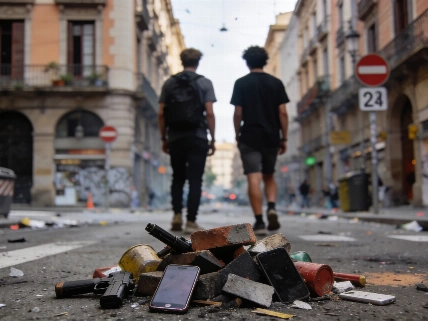
Tensions on the streets mirrored the political divide. Clashes between Aliança Catalana supporters and antifascist groups broke out at the Fossar de les Moreres, prompting police intervention. A photojournalist was assaulted. Later, masked separatists set fire to containers near Arc del Triomf. Aliança Catalana’s presence at the basic march and Sílvia Orriols’ public appearances signaled the party’s growing acceptance and potential influence in future municipal elections.
Controversy grew after political scientist Ramon Cotarelo made inflammatory remarks about the Muslim community during a Diada event in Ripoll. The local council distanced itself from his comments. The incidents highlighted the risk of ethnic and religious tensions entering mainstream Catalan politics.
Despite calls for unity, efforts to build a broad civic alliance against the far right have gained little traction. Xavier Antich, president of Òmnium Cultural, proposed a "majority, radically democratic civic front" to defend rights and national sovereignty, but the idea drew little support.
This Diada exposed a Catalan political scene at a turning point. The traditional independence movement faces internal fatigue and new competition from a far-right party that has seized public attention with divisive themes. Established parties have stressed unity and inclusion in response, but without concrete action, those words may not be enough to slow Aliança Catalana’s advance.
Catalonia’s independence movement has long focused on self-determination and resistance to central government control. Aliança Catalana’s rise has brought fresh debate over identity and immigration, with security also in focus. As the region nears the tenth anniversary of the 1-O referendum, the question is no longer only about independence. It is also about what kind of society Catalonia wants to be.