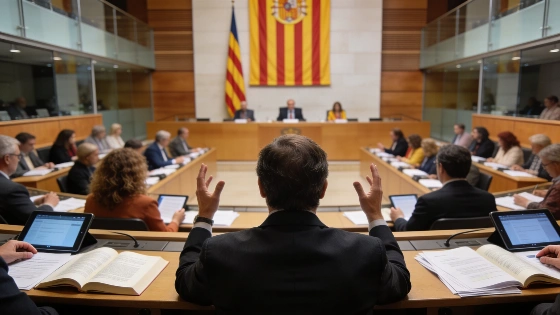
Catalonia is set to update legal language on disability. Lawmakers approved a rapid reform to replace outdated and offensive terms in 25 regional laws. The change aligns with international standards and affects key areas of public policy.
The Catalan Parliament has approved an expedited process to modernize the language used to describe disability in regional legislation. In a rare show of broad political consensus, all parliamentary groups except Vox supported the move, which will see 25 laws amended to remove terms now considered outdated or offensive. The reform aims to bring Catalonia’s legal framework in line with the United Nations Convention on the Rights of Persons with Disabilities, which Spain ratified in 2008.
The legislative change will be processed through the single reading procedure, the fastest route available in the Catalan Parliament. The proposal, jointly signed by PSC, Junts, ERC, PP, Comuns, and the CUP, was developed by a drafting committee within the Commission on Social Rights and Inclusion. The main objective is to ensure that all references to disability in Catalan law use language that is respectful, precise, and inclusive, as outlined in the bill’s explanatory statement.
Among the most significant updates, expressions such as “personas discapacitadas” and “personas disminuidas” will be replaced with “personas con discapacidad.” The term “discapacidad psíquica” will become “discapacidad intelectual,” while “discapacidad mental” will be updated to “discapacidad psicosocial.” These changes reflect both the evolution of terminology promoted by advocacy groups and the standards set by international conventions.
The reform will impact a wide range of legal areas, including social services, equality, accessibility, mental health, and the Catalan Civil Code. The goal is to harmonize the entire legal system with current international norms. A final provision in the bill will require all future legislation from the Generalitat to use appropriate and respectful terminology when referring to people with disabilities.
The explanatory statement notes that, despite Spain’s ratification of the UN Convention in 2008, some Catalan laws still contain language that has become pejorative or even offensive. The reform follows the example set by the Spanish Congress last year, which amended Article 49 of the Constitution to replace “disminuidos” with “personas con discapacidad.”
Updating legal terminology is not unique to Catalonia. Across Spain and other European countries, there has been a growing movement to align official language with the rights-based approach promoted by the UN. This shift is seen as essential for combating stigma and ensuring equal treatment. In practice, the new terms are expected to influence not only legal texts but also administrative documents and public discourse. The reform highlights the ongoing effort to adapt public policy to evolving social standards and international commitments.