Catalonia’s PISA scores were invalidated after nearly a quarter of selected students were left out. The episode exposes deep problems in the region’s education oversight and leaves major questions about accountability.
The OECD has thrown out Catalonia’s PISA results after finding that almost 25% of selected students were excluded from the test—well above the allowed limit. This error not only removed Catalonia from the international education rankings but also revealed a breakdown in the region’s system for evaluating schools at a crucial time.
The main problem was a lack of leadership. The Council Superior de Evaluación, which managed PISA and other assessments, was already struggling when the tests were being organized. Its last president, Carlos Vega, was dismissed in January 2024 after earlier PISA problems. For more than a year, the Council was run by interim leaders, with the director general of Currículo handling several jobs at once.
According to ElDiario and ARA, only 1,909 out of approximately 2,500 selected students in Catalonia actually participated in the PISA assessment, with 591 excluded—far exceeding the OECD's 5% exclusion limit.
During this period, the Catalan government tried to replace the Council with a new Agency of Evaluation. The agency was officially launched in April 2025—right in the middle of PISA testing—but it had no full staff or working structure. Its new director, Núria Planas, later said the agency was not really functional until July, and even then, it was still hiring technical staff.
Meanwhile, many experienced Council staff either left or were replaced, and there was no proper handover. This left the organization without the knowledge or continuity needed to run PISA smoothly. One former member described the Council as "decapitated," and the resulting power vacuum meant serious mistakes went unnoticed.
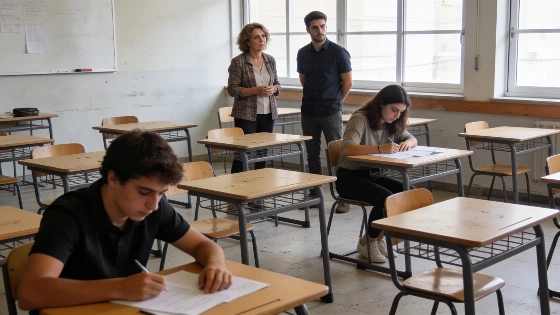
The effects were immediate. Schools received incomplete instructions and were not told about the strict rule that no more than 5% of students could be excluded from the sample. Instead, 23% were left out, often because of language barriers or learning difficulties. The Council ignored repeated warnings from PISA organizers, and the mistake was only caught by Spain’s Ministry of Education after the data had already been sent.
ARA reports that the National Institute for Educational Evaluation (INEE) warned Catalan authorities up to seven times about sampling issues, with several alerts sent as early as April 2025—when corrective action was still possible. However, an internal inquiry found no evidence that these warnings were effectively communicated to schools, highlighting a significant management failure.
Adding to the confusion, two senior officials—the director general and the secretary of Mejora Educativa—were dismissed in October 2025, just months after the PISA incident. Both had also faced criticism over a controversial curriculum reform that merged several science subjects, which teachers opposed. During this unstable period, schools were also running other regional and national assessments, but only PISA had strict exclusion rules.
Some officials have tried to downplay the PISA error, but insiders say other assessments also suffered from poor planning. For example, oral language tests were supposed to be done remotely by outside evaluators, but this plan was dropped after teachers complained. The lack of clear leadership and technical support left many schools confused and on their own.
After the Ministry of Education declared Catalonia’s PISA results invalid in March 2026, an internal investigation began. Three disciplinary cases were opened against two former Council technicians and a former senior official. On the same day, the department’s number two, Teresa Sambola, was dismissed, though the education minister denied any direct link to the PISA case.
Experts in educational assessment have said they are shocked by the scale of the exclusion. Francesc Pedró, a former OECD analyst, said he had never seen such a high exclusion rate. Joan Mateo, who led the Council from 2009 to 2021, argued that responsibility does not rest only with a few technicians, especially since higher-ups missed the error. The lack of transparency and accountability has deepened the sense of institutional failure.
The result is clear: Catalonia’s expanded PISA sample, which the region pays for to get detailed data from many schools, will not be analyzed or reported by the OECD. Only the raw data will be published, and it will be used only for Spain’s national average. The new Agency of Evaluation has said it will not produce its usual detailed report, leaving analysts with little more than unprocessed numbers.
This is not the only recent case of bureaucratic failure in Spain’s public sector. As reported earlier, similar problems with oversight and transition have caused serious issues in other regions and sectors. The Catalan education crisis is a warning: when experienced staff are lost and leadership is missing, even established systems can fall apart quickly. The government’s attempt to modernize its evaluation process has instead shown how fragile these reforms can be without continuity, expertise, or real accountability.