Salvador Illa defends his government’s record despite the Pisa report setback. He urges PP-led regions to back the new funding model. Daily transport failures and education unrest add pressure.
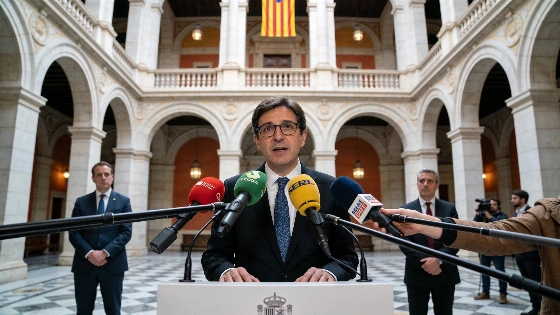
Salvador Illa, president of the Generalitat de Cataluña, has publicly reaffirmed his confidence in his government’s direction, even as the fallout from the Pisa report error continues to stir controversy. Speaking at the Palau de la Generalitat after returning from an official trip to Singapore, Illa dismissed the idea of a cabinet reshuffle and specifically backed Education Minister Esther Niubó, whose department faces criticism after a data error excluded Catalonia from the latest Pisa assessment. The mistake, which saw 23% of students omitted from the sample—far above the 5% threshold—means Catalonia’s results cannot be compared with previous years, intensifying scrutiny of the region’s education system.
Despite daily disruptions on the Rodalies commuter rail network and mounting unrest in schools, Illa presented a largely optimistic assessment of his administration’s progress. He highlighted recent budget approvals, a €1.4 billion investment plan for public works through December, and pointed to improvements in employment and the return of major companies to Catalonia. Illa argued that the region is at a turning point, citing a jobless rate below 8% and increased investment in housing. He insisted that his government has stabilized Catalonia after a period of division and stagnation, aiming to make it “the best country in the world to invest and live in.”
Education remains a flashpoint. The Pisa report error has triggered renewed calls for accountability, with unions planning strikes at the start of the school year. Illa, while expressing full support for Niubó, called for a resolution to the issue but did not clarify why it took four months to inform the public. He emphasized the need to uphold both the right to strike and the right to education, but stopped short of announcing new offers to unions. The education crisis is set to dominate the political agenda as the new term begins.
On the financial front, Illa made clear that implementing the new regional funding model is now his top priority. The proposal, which would transfer €21 billion to Spain’s autonomous communities—€4.7 billion earmarked for Catalonia—faces a difficult path, with opposition from both the PP and Junts. The next key step is a meeting of the Council of Fiscal and Financial Policy on September 4. Illa challenged PP-led regions to follow the example of the Canary Islands, which support the plan, and questioned what alternative they could offer. He stressed that the agreement was reached through calm, loyal negotiation, and while he maintains commitments to ERC on future tax collection, he insisted that the funding model must come first.
Relations with coalition partners ERC and Comuns have so far enabled the government to pass 98% of its legislative agenda, with 84% voting alignment in parliament. Illa did not rule out passing a 2027 budget, but said the current financial plan could last the full term if necessary. Recent contracts include €450 million in public works, such as the Les Preses and Olot bypass, with another €500 million in projects expected by year-end. The government has also increased funding for wildfire prevention, raising the budget for firebreaks from €1.5 million to €15 million, and called on citizens to help prevent forest fires.
After his Southeast Asia tour, which included stops in Vietnam and Singapore, Illa announced plans for further official trips this year, including a visit to Ukraine to demonstrate support and cooperation. The focus on international engagement echoes the approach seen in other Spanish regions facing external challenges, such as Ceuta’s recent call for national emergency measures in response to migration pressures, as reported in coverage of Ceuta’s response to a surge in migrant arrivals.
For context, Catalonia’s education system has faced criticism in recent years over performance and resource allocation, with the Pisa report traditionally serving as a benchmark for progress. The Rodalies network, operated by Renfe, has long been a source of commuter frustration due to frequent breakdowns and delays. The new funding model is part of a broader debate over fiscal autonomy and resource distribution among Spain’s regions, a recurring issue in national politics. Illa’s ability to navigate these challenges will likely shape both his government’s stability and Catalonia’s position within Spain in the coming years.