Ceuta faces a sharp rise in migrant arrivals, prompting its president to urge the Spanish government for a national emergency declaration and unified command. Over 1,500 people have entered in a week, straining local resources.
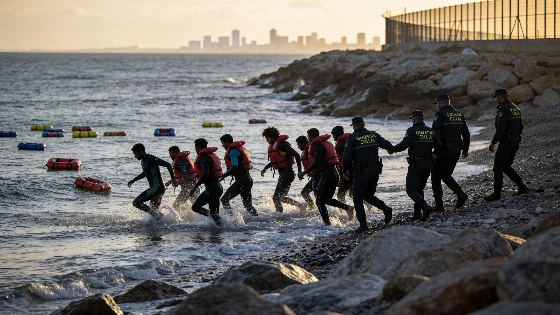
Ceuta is experiencing a dramatic escalation in migrant arrivals, with President Juan Jesús Vivas urging the Spanish government to declare a national emergency and assume direct control over the response. In recent days, hundreds of people—mainly young Moroccan men, but also some women—have reached the city by swimming along the coastline, overwhelming local facilities and reviving memories of the 2021 border crisis.
Vivas, speaking to Cadena Ser, described the situation as unprecedented in scale and intensity. He emphasized that Ceuta, together with Melilla, represents the only land and maritime border between Spain, Europe, and Africa, making it a focal point for migration pressures. According to the president, the city has seen approximately 1,500 new arrivals in just one week, nearly 2% of Ceuta’s total population. The daily influx now averages around 300 people and continues to rise.
Authorities report that about 700 of those who have arrived are minors. More than 1,000 young people are currently waiting outside the temporary reception center, which has capacity for just over 500. The Guardia Civil has been escorting new arrivals to these facilities, but some migrants, wary of the process, have fled into nearby ravines. The scenes echo the events of 2021, when thousands crossed the border in a single day as diplomatic tensions between Spain and Morocco flared and Moroccan authorities offered little resistance.
Vivas has called for the government to implement a “decisive, energetic, and immediate” response, coordinated through a single command structure. He insists that only a unified approach can address the scale of the current emergency. The president maintains ongoing contact with the central government, including the Delegation and various ministers, and expects his request to be met with understanding and action.
Managing the overflow at reception centers has become a critical issue. While adult facilities fall under state responsibility, the city is tasked with caring for minors and is seeking additional financial support from Madrid. Vivas describes the situation as a humanitarian and social emergency, requiring both provisional resources and long-term solutions.
He also highlights the need to strengthen cooperation with Morocco to stem the flow of arrivals and calls for increased personnel and resources for Spain’s border and security forces. Another pressing concern is the legal framework for handling migrants who enter by sea. Following a recent Supreme Court ruling, express rejections are only permitted for those who cross established border barriers, not for those who swim in. Vivas argues that legislative changes are needed to address this gap.
The president warns that if the current trend continues unchecked, Ceuta could soon face a crisis on the scale of May 2021. The daily flow of migrants, he says, is already straining the city’s capacity to respond. This situation mirrors challenges faced elsewhere in Spain, where emergency coordination has been crucial during other crises, such as the wildfires that displaced thousands in Madrid’s Sierra region—an event that highlighted the importance of unified action, as reported in coverage of emergency responses in Madrid.
Ceuta’s unique geographic position at the crossroads of Europe and Africa has long made it a focal point for migration. The city’s limited resources and small population amplify the impact of sudden influxes. Spanish law currently places responsibility for unaccompanied minors on the autonomous city, while adults fall under national jurisdiction. The ongoing situation underscores the need for coordinated policy, adequate funding, and international cooperation to manage migration flows and humanitarian needs at Spain’s southern border.