Spain has approved over 21 million euros in direct subsidies for Ceuta and Melilla to cover the soaring costs of water supply. Ceuta will receive an extra 2 million euros due to a recent migration crisis, pushing total aid to 23.5 million euros for 2026.
Spain’s Council of Ministers has approved 21.5 million euros in direct funding for Ceuta and Melilla to help cover the high cost of supplying water in these two North African cities. Ceuta will receive an additional 2 million euros in response to a recent surge in migration, bringing the total for 2026 to 23.5 million euros.
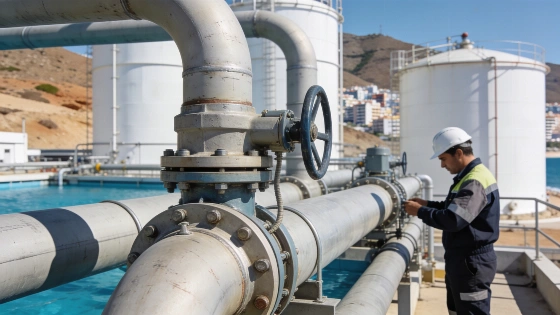
Ceuta and Melilla, unlike most regions in Spain, cannot use traditional water sources. Their location means they depend on expensive desalination plants, so the central government provides regular subsidies to keep water services running. The 2026 funding matches last year’s ordinary support, but Ceuta’s share rises to 9.2 million euros with the emergency funds included. Melilla’s allocation remains at 14.3 million euros.
According to official government estimates, total budgetary support for Ceuta and Melilla could reach 507.5 million euros by 2031, covering both structural and crisis-response measures.
Ceuta will get 7.2 million euros in standard support, plus 2 million specifically for the aftermath of the July migration crisis. Melilla’s funding stays the same, with no extra aid announced. These funds go directly to city administrations for infrastructure and public services, not to individual residents.
Desalination is the main reason for these ongoing costs. Turning seawater into drinking water is much more expensive than using rivers or reservoirs, and both cities have no real alternative. In 2025, the government provided the same total amount, with 8 million euros for desalination plants, 3.25 million for other projects in Ceuta, and 10.25 million for Melilla. The latest decree does not specify if this breakdown will be repeated, so some details are still pending.
The extra 2 million euros for Ceuta is a direct response to the migration crisis on July 30 and 31, 2026. This money will be delivered through a separate legal process, not as part of the usual annual support. The government has not yet published the final details of the new decree, including its official number, publication date, or the exact process for distributing the funds. City officials are preparing to allocate the money as soon as the rules are clear.
The Spanish government, as confirmed by the Ministry of Finance and Moncloa, has explicitly linked the emergency funding package to the strengthening of basic services in Ceuta, with water supply named as a critically important resource. RTVE and Moncloa both report that the 2 million euros in extraordinary aid for Ceuta will be used to optimize the city’s desalination plant, and all emergency funds must be spent in 2026 on infrastructure and public services, not direct payments to residents.
For residents, this announcement does not mean direct financial help. The subsidies are for municipal use only, and there will be no application process for families or individuals. Anyone seeking personal assistance will need to turn to other social programs, as noted by Talent24h.
The government’s decision highlights the ongoing, exceptional costs Ceuta and Melilla face. While other parts of Spain debate water management and climate adaptation, these two cities remain dependent on state support because of their geography. The latest funding is a reminder that, for Ceuta and Melilla, the cost of water depends less on markets or weather than on their location—and on Madrid’s willingness to keep paying for it.