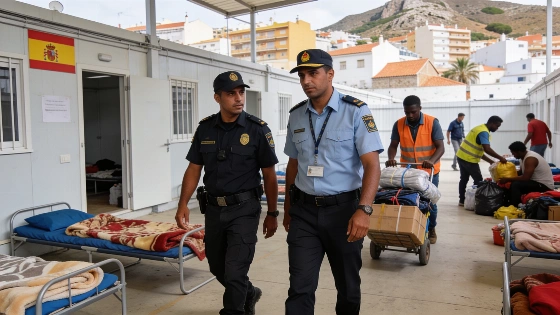
Ceuta faces renewed pressure as migrant arrivals force rapid expansion of temporary shelters. Ministers clash over intelligence warnings. Parliament prepares to debate the government's response.
Ceuta is once again at the center of Spain’s migration debate after a surge of irregular arrivals at the end of July forced authorities to accelerate the expansion of temporary accommodation. More than a thousand people, previously camped on El Trampolín beach, have now been relocated as the city’s resources are stretched to their limits. The Minister of Inclusion, Social Security and Migration, Elma Saiz, returned to Ceuta on Wednesday to oversee the ongoing work and assess the capacity of the new facilities.
The government’s response has triggered a sharp political dispute. Just a day earlier, Ángel Víctor Torres, Minister of Territorial Policy, was appointed as the sole coordinator for managing the crisis in the autonomous city. This move comes as the Permanent Deputation of Congress prepares to debate and vote on whether Prime Minister Pedro Sánchez should appear to explain the executive’s actions in Ceuta. The situation has exposed divisions within the cabinet, particularly over the role of intelligence services in anticipating the mass entry of migrants.
Interior Minister Fernando Grande-Marlaska and Defence Minister Margarita Robles have offered conflicting accounts regarding reports from the National Intelligence Centre (CNI). While Robles maintains that intelligence services did warn the government about the risk of a large-scale arrival, Marlaska categorically denies receiving any such alerts, insisting there were no reports from the CNI or from allied countries. This disagreement has added to the political tension surrounding the government’s handling of the crisis.
As the debate intensifies, the city’s infrastructure continues to adapt under pressure. The rapid relocation of migrants from makeshift camps to official shelters marks a significant logistical effort, but questions remain about the sustainability of these measures. According to recent analysis by RUSSPAIN, political parties have called for even more robust action, including continuous shifts to accelerate returns and relieve local services.
Ceuta’s unique position as a Spanish enclave on the North African coast has long made it a focal point for migration flows. The city’s proximity to Morocco and its status as an external EU border mean that any spike in arrivals quickly becomes a national issue. The current crisis has reignited debates over Spain’s border management, the adequacy of intelligence sharing, and the balance between humanitarian response and security. As Parliament prepares for further discussion, the outcome may set important precedents for how Spain addresses similar challenges in the future.