Food deliveries to migrants in Ceuta are now being blocked by residents. The government calls on the PP to help stop violence and restore order. Tensions rise as volunteers and officials face growing hostility.
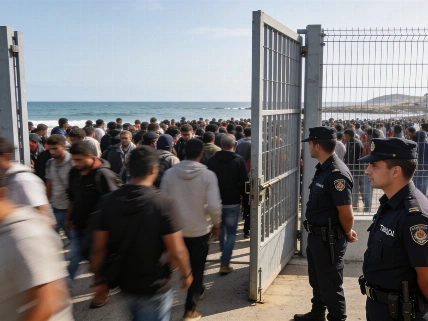
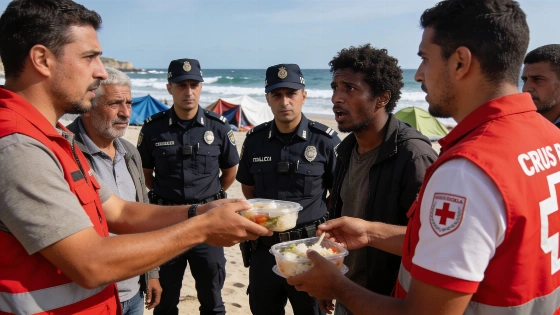
Ceuta is experiencing a sharp escalation in social tension after groups of residents began blocking daily food distribution to migrants on the city’s beaches. For months, authorities managed to provide meals to thousands of people stranded in the enclave, preventing larger disturbances. Now, even this basic support is under threat, with police forced to intervene to separate protesters from migrants and volunteers. The situation has left Cruz Roja staff increasingly fearful for their safety, as attempts to deliver food at El Trampolín beach have been met with resistance and intimidation.
In response to the growing unrest, the central government has publicly appealed to all political parties—especially the Partido Popular (PP), which has governed Ceuta for 25 years—to join in condemning the violence and help restore calm. Ángel Víctor Torres, who leads the government’s crisis response, revealed that he and Ceuta’s president, Juan Jesús Vivas, agreed on a joint message denouncing the violence. However, this call for unity has so far failed to gain broad support in Parliament. During a heated session, PP senator Cristina Díaz insisted that violence by migrants against military personnel should be the main focus, while Torres stressed the need to also address attacks on migrants, Muslim residents, and Cruz Roja volunteers.
The crisis deepened further when a crowd of around 100 people managed to halt food deliveries for an extended period, followed by incidents of violence and the burning of a makeshift migrant camp. Torres warned that volunteers now feel threatened and some are considering abandoning their roles. He also highlighted attacks on journalists and public officials, emphasizing that violence against any group is unacceptable. Despite repeated calls for cooperation, the political divide between the government and opposition remains stark, with the PP and Vox using the crisis to criticize the executive’s handling of migration and security.
Justice Minister Félix Bolaños, addressing Parliament, pointed out that former Prime Minister José María Aznar never made an official visit to Ceuta during his tenure, contrasting this with Pedro Sánchez’s four official trips. Bolaños also rejected claims that Morocco orchestrated the mass entry of migrants, arguing that improved bilateral relations have enabled the rapid return of over 90% of those who entered in late July. However, a significant group remains, creating ongoing logistical and social challenges.
Efforts to relocate migrants from the beaches to temporary centers have stalled, as proposed sites near residential areas face strong local opposition. Torres noted that locations further from the city, such as Tarajal near the border, would require months of work to become usable. This deadlock has created a cycle where residents want migrants removed, but oppose any nearby accommodation, delaying the start of repatriation procedures.
On Friday, a new crisis meeting led by Pedro Sánchez is expected to address possible new sites for processing and housing migrants. Last week, space was found for 1,800 people, but the need is far greater. Torres cautioned that immediate mass returns are not possible and that restoring normality will take time. Government sources admit they did not anticipate the scale of local resistance to food distribution, warning that without daily meals, the risk of unrest would be far higher. According to officials, the provision of 4,000 meals a day has been crucial in maintaining relative calm until now.
Ministers are increasingly concerned about the surge of hate messages on social media, which have encouraged hostility toward migrants. Volunteers and civil servants report mounting pressure, with some considering stepping down. The government’s position is further complicated by the refusal of the PP and Vox to support transfers of migrants, especially minors, to the mainland—a measure that helped manage a similar crisis in 2021. As noted in recent coverage of the political fallout in Ceuta, the current standoff is fueling calls for early elections and intensifying scrutiny of the government’s crisis management.
Spain’s legal and political constraints limit options for mass deportations or transfers to the peninsula, with EU rules and past legal challenges shaping the response. The government hopes to ease tensions in the coming days, but for now, the pressure on Ceuta’s institutions and residents continues to mount. The situation highlights the complex interplay between migration policy, local sentiment, and national politics in one of Spain’s most sensitive border regions.