Ceuta’s border districts are overwhelmed as migrant arrivals strain local resources. Residents protest new shelters near schools. The city remains divided between those who see migrants as invaders and those who offer support.
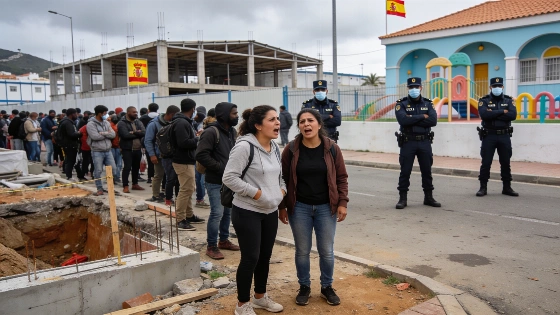
Ceuta’s uneasy calm broke again as hundreds of migrants crowded the gates of Loma Colmenar, hoping for a spot in shelters that are already full. The government’s latest move to ease pressure in the city center has shifted the conflict to the outskirts, where new centers are being built directly across from schools and nurseries.
According to Spanish government and Reuters data, around 72,000 people crossed into Ceuta in just two days during the unprecedented border surge of July 30–31, 2026.
Inside the shelters, those who have a bed wear colored wristbands instead of documents, each marked with a number that now decides their status. Outside, the air is thick with the smell of overcrowding and frustration. Police patrol in masks, not just for health reasons but to shield themselves from the stench and the anger of neighbors who feel abandoned by the authorities.
Meanwhile, the city’s historic center remains under heavy military and police control. Migrants are not allowed to enter the heart of Ceuta, and the idea of normal life feels more distant. Even high-profile visits, like that of national football coach Luis de la Fuente, have become political events. De la Fuente praised the resilience of “all the caballas” and called for a return to normal life, but the situation on the ground is far from stable.
By early September 2026, local authorities and Reuters reported that more than 10,000 migrants, including about 1,200 minors, remained in Ceuta, many living in camps, on the streets, or on beaches. The Spanish government responded with a €165 million emergency package to expand reception infrastructure and accelerate returns.
Ceuta’s crisis is not unique. As reported earlier, Spain’s response to border surges is under legal and political scrutiny, with national courts considering investigations into the causes and consequences of recent influxes. The city’s experience shows the limits of emergency measures and the cost of shifting responsibility to the edges. Temporary shelters may clear the city center, but they do not resolve the deeper conflict over who belongs and who decides. Ceuta’s neighborhoods are left to deal with the fallout, while city leaders offer little more than promises of a return to normality that feels further away each day. For now, Ceuta’s border is not just a line on the map—it is a battleground of language, policy, and worn-out patience, with no easy solution.