Ceuta will begin burying 76 unidentified migrants this week after a deadly mass crossing at El Tarajal. Local authorities are finalizing arrangements for dignified Muslim burials amid ongoing public health challenges.
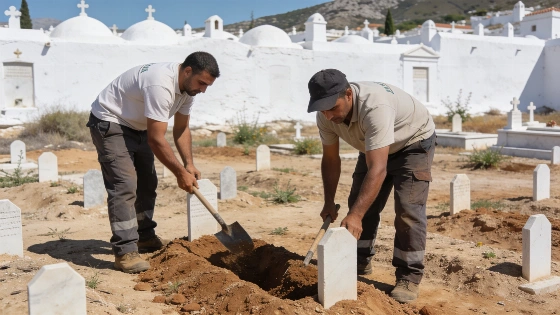
Ceuta is set to begin the burial of 76 unidentified migrants who lost their lives during a mass attempt to cross the border at El Tarajal at the end of July. The bodies, recovered from the sea over two days, have been held in a temporary morgue at the former military hospital, where autopsies were conducted. With storage capacity exhausted and identification efforts largely unsuccessful, the city’s health and social services, led by councillor Nabila Benzina, are finalizing plans to lay the victims to rest in a designated section of the Sidi Embarek Muslim cemetery.
The scale of the tragedy has placed exceptional strain on Ceuta’s resources. In total, 82 people died during the crossing, most of them men in their thirties and forties, along with one woman. Only six victims have been identified so far, and authorities are working to repatriate their remains to Morocco. The remaining bodies will be buried in groups, each marked with a number and basic details such as the date and location of recovery, clothing, and distinguishing features. The process will follow Muslim burial rites, including ritual washing and shrouding, with graves oriented toward Mecca.
Health regulations recommend that bodies remain refrigerated for no more than six days, or frozen for up to 21. However, the makeshift morgue in Ceuta can only provide refrigeration, not freezing, making it urgent to proceed with burials. The legal paperwork for interment has already been completed. According to Benzina, it is rare for families of Moroccan or sub-Saharan victims to claim remains, though there have been exceptions with Algerian nationals. Exhumation and repatriation after burial are considered unlikely.
The aftermath of the mass arrival has also intensified public health efforts in Ceuta. With an estimated 80,000 migrants having entered the city and around 7,000 still living in precarious conditions on the streets, the health department has expanded water quality testing at beaches and irrigation points, especially in areas where informal settlements have formed. Benzina notes that staff from other health sectors are supporting epidemiological monitoring, and additional vaccines and tuberculosis tests have been procured. However, she acknowledges that controlling infectious diseases remains difficult while migrants are dispersed and not housed in organized facilities.
Recent weeks have seen reports of scabies among military personnel and police, which Benzina attributes to overcrowding. She emphasizes that while the condition is highly contagious, it is not life-threatening and can be treated effectively. The city continues to monitor and respond to public health risks as the situation evolves.
This crisis follows the unprecedented pressure faced by Ceuta’s forensic services, as detailed in a recent report on the challenges encountered by local forensic teams during the immediate aftermath of the tragedy.
Ceuta’s experience highlights the ongoing humanitarian and logistical challenges at Spain’s borders. The Sidi Embarek cemetery, which has already been expanded several times, now faces further pressure as the city seeks to provide dignified burials for those who died seeking a new life. The situation underscores the complexity of managing mass migration events, balancing public health, legal, and religious considerations in a context of limited resources. Spain’s border cities like Ceuta remain on the front line of these challenges, with local authorities adapting to evolving demands and the realities of irregular migration in the region.