Two PSOE deputies in Ceuta have publicly criticized the government's response to the migration crisis. They call for a state of alarm, national emergency status, and permanent Frontex presence at the border.
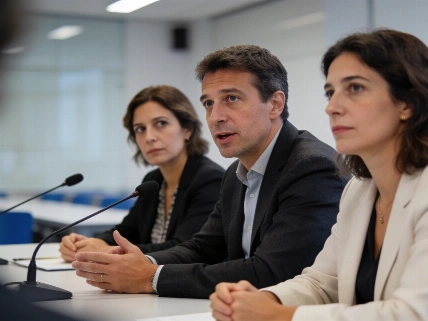
Ceuta's migration crisis has triggered an open confrontation within the PSOE, as deputies Melchor León and Sebastián Guerrero broke ranks to demand urgent intervention from the central government. Both deputies, representing the PSOE in the Ceuta Assembly, insist that the city's interests must come before party discipline. They are calling for the immediate declaration of a state of alarm in Ceuta, a national emergency to improve resource management, and a permanent deployment of Frontex at the border.
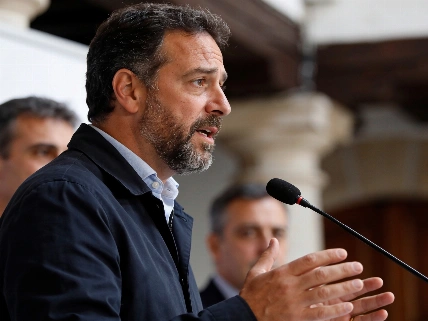
León and Guerrero argue that the government's current approach lacks the necessary force and clarity. In a press appearance, León criticized the executive led by Pedro Sánchez for failing to deliver concrete solutions, stating that ministerial visits have resulted in little more than promises. He specifically called out Interior Minister Fernando Grande-Marlaska, urging him to fulfill his commitment to return migrants who entered Ceuta irregularly at the end of July. León warned that if the minister does not act or publicly address the issue, he should resign.
The deputies also highlighted the strain on Ceuta's healthcare system, describing it as inadequate for the current situation. They urged the government to accept all available European Union assistance, noting that while Europe offers support, Spain has not requested it. León emphasized that all resources should be utilized, regardless of their origin, to address the city's humanitarian, health, and security needs.
Both León and Guerrero stressed that their stance is not a rejection of the PSOE, but a prioritization of Ceuta's welfare. They expressed pride in their party affiliation but argued that it would be hypocritical not to demand transparency and decisive action at a time when Ceuta is, in Guerrero's words, disordered, overwhelmed, and in need of answers.
The deputies' criticism extended to the local government led by Juan Jesús Vivas, particularly regarding the presence of unaccompanied foreign minors on the streets. León placed responsibility on the autonomous administration, urging it to take decisive measures to address a problem that falls within its remit.
León has repeatedly called for the state of alarm to ensure effective control of the crisis, as well as for the declaration of a national emergency to streamline the management of health, humanitarian, and security needs. He also advocates for the presence of the Unidad Militar de Emergencias (UME) in Ceuta during the identification and processing of protection requests, and for Frontex to be stationed at the border on a permanent basis. These demands were outlined in a letter to the Prime Minister and reiterated in his latest public statements.
The deputies' decision to directly represent the PSOE in the boards of public companies in Ceuta has further fueled tensions with the local party leadership, which has escalated the matter to federal bodies. Guerrero defended this move as necessary to ensure parliamentary oversight of public enterprises, clarifying that these roles are unpaid and not motivated by personal gain.
This latest escalation follows previous internal disputes within the PSOE in Ceuta. Recently, Melchor León publicly called for the resignation of the government's delegate in the city, a move that exposed deeper divisions within the party amid the ongoing migration crisis. Details of that episode can be found in the report on León's demand for the delegate's resignation.
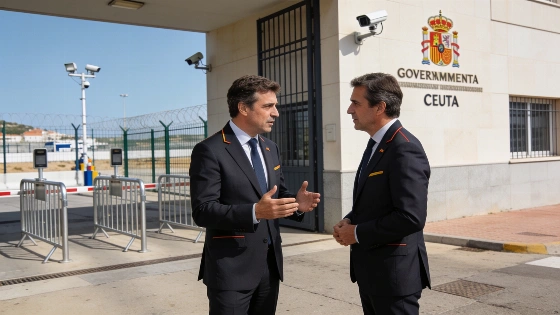
Ceuta, a Spanish enclave on the North African coast, has long faced migration pressures due to its proximity to Morocco. The city serves as a key entry point for migrants seeking to reach Europe, and recent surges have strained local infrastructure and heightened political tensions. The call for a state of alarm and permanent Frontex presence reflects growing concern over the city's capacity to manage these challenges. The situation in Ceuta continues to test the balance between national policy, local governance, and European cooperation, with the PSOE's internal divisions highlighting the complexity of the crisis.