China’s rise as an economic giant has forced Europe to rethink its game plan. Salvador Beltrán breaks down how China’s system, population control, and focus on education have shifted the balance—and what this means for European industries.
Salvador Beltrán doesn’t sugarcoat it. China has shaken up the global order by sticking to its own playbook. Europe and the US are left trying to catch up. For Beltrán, the real surprise isn’t that China became the world’s second-biggest economy in fifty years. It’s that Western leaders failed to see how far Beijing would go to protect its interests and change the rules.
China joined the World Trade Organization in 2001. That changed everything. Western governments thought China would stay a minor player. They didn’t see how big its ambitions were. Beltrán says China used its state-driven model to get ahead. The government called the shots at home and abroad. “They always play by their own rules,” he says. He points to the Communist Party—“which is neither a party nor communist in the traditional sense”—as the force behind China’s economic push.
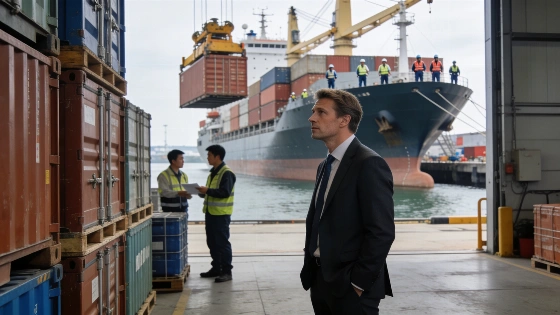
According to Eurostat, in 2025 the EU imported €559.4 billion worth of goods from China while exporting only €199.6 billion, resulting in a record trade deficit of €359.8 billion—about €1 billion per day.
Three things made this possible: a mixed economic system, a population used to strict control, and a sharp focus on education. Beltrán doesn’t waste time on the old debate about whether China is capitalist or communist. He sees a practical mix. The state drives growth but leaves enough room for the market to bring in investment and new tech. This model has pulled millions out of poverty. But it comes with tough working conditions and tight oversight.
Beltrán says Western talk about population control misses the point. It’s not just about political repression. He describes a society shaped by centuries of discipline and a sense of collective duty. The state’s grip goes beyond censorship. It shapes daily life. The result is a workforce willing to put up with exploitation if it means national progress.
Education is what let China break out of the “middle-income trap.” Countries like Mexico and Brazil lost their edge as wages rose. China saw this coming. It poured money into education and long-term reforms. The country moved from being the world’s factory to a center for talent and innovation. Its push in artificial intelligence and robotics is no accident. It’s the result of decades of planning.
In the second quarter of 2026, the EU's trade deficit with China reached €103 billion, the highest quarterly figure since Q3 2022. According to statements by Ursula von der Leyen on September 16, 2026, the EU is prepared to use all available tools to address what she called an 'unsustainable' imbalance, including potential restrictions on hybrid vehicle imports and new anti-subsidy measures.
Europe is stuck between protectionism and trying to adapt. Beltrán notes that Brussels, led by figures like Von der Leyen, is starting to copy some of China’s moves to protect its own industries. The EU’s new car manufacturing rules are a direct answer to China’s aggressive push. But Beltrán points out that Europe hasn’t put the same pressure on American tech, even though the US keeps a tight grip on its own digital giants. China is the only big country that has managed to keep US tech dominance at bay.
Chinese companies are changing tactics to get around tariffs and new rules. They’re building factories in Morocco, buying up plants like Ford’s in Valencia, and looking for ways to label their goods as European. The EU is pushing back. It wants fair treatment and is making it harder for Chinese firms to buy in. Beltrán says Europe has to act together, not as separate countries, or it risks becoming dependent on outside powers.
Spanish businesses are feeling the shift too. In the last five years, about 1,000 companies from the Comunitat Valenciana have left China, many in the shoe business. Higher wages in cities like Shanghai have wiped out the cost advantage that once drew European firms. Even big names like Telefónica and major banks are pulling back, blaming political barriers and tough conditions. Tesla’s story is telling—China forced it to export much of what it makes there. Foreign companies face real limits in China.
China’s drive in artificial intelligence is just as tough. The country is pushing for global rules, open-source standards, and international oversight. The US is fighting any move that could weaken its control. Beltrán is blunt: China won’t settle for a lesser role. It will only deal as an equal.
For anyone watching global trade, China’s rise isn’t the end of the story. As reported earlier, European regions are already shifting course. Imports from Asia now outpace those from the Americas. This isn’t just about money. It’s a deep change, forcing governments and industries to rethink alliances, supply chains, and what it means to compete.
Beltrán doesn’t look back with nostalgia. The days of Western dominance are over. China’s methods—controversial or not—have worked. Europe’s only real choice is to adapt smartly and stick together. Otherwise, it risks being pushed aside in a world where the rules are no longer set in Brussels or Washington. The warning is clear: anyone who underestimates China’s ability to reinvent itself does so at their own risk.