The Spanish Congress approved a PP motion calling for a confidence vote and the resignation of Pedro Sánchez. Junts and Vox supported the move, highlighting deepening divisions and raising questions about the government’s stability.
The Spanish Congress has passed a motion from the Partido Popular (PP) demanding that Prime Minister Pedro Sánchez submit himself to a vote of confidence and consider stepping down. The initiative, which received crucial support from both Vox and Junts, underscores the growing political tension in Madrid and signals a new phase of parliamentary confrontation.
The motion, debated during the final ordinary session of the current legislative period, called on Sánchez to either face a confidence vote or resign due to ongoing corruption investigations involving figures close to his administration. The proposal was approved with 178 and 177 votes in favor on its two main points, against 171 opposing votes. Despite the outcome, the motion carries no binding legal force for either the president or the legislature, but its political weight is significant.
Junts, led by Carles Puigdemont, played a decisive role in the vote. The party’s leadership emphasized that their support should not be interpreted as alignment with the broader Spanish political blocs. Instead, Junts maintains a strategy of voting on individual issues, sometimes even splitting their position within the same legislative session. Their current demand is for Sánchez to step aside and for the PSOE to nominate a new candidate, whether from within the party or an independent figure. This approach has allowed Junts to back certain government decrees while simultaneously supporting opposition motions targeting Sánchez.
The PP’s motion, officially titled “on the unsustainable situation of the Government of Spain,” has been at the center of controversy for weeks. Junts attempted to amend the text to include the possibility of early elections, but the PSOE- and Sumar-controlled Congressional Board blocked both PP and Junts from introducing such changes. The final version of the motion specifically urged Sánchez to consider a confidence vote, citing his exclusive constitutional authority to call elections, and pressed for his resignation in light of accumulating corruption probes involving government appointees and associates.
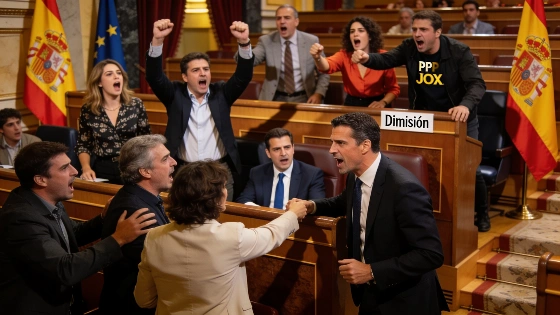
During the session, the PP bench vocally demanded Sánchez’s resignation, arguing that the government is paralyzed: lacking a parliamentary majority, unable to pass a national budget, and beset by judicial investigations. Junts, for their part, refrained from participating in the debate, signaling that their position had already been made clear through their call for Sánchez and the PSOE to reflect on whether he should remain in office, especially given unmet commitments to Catalonia.
In the final vote, Junts joined the parliamentary right, lending their seven seats to ensure the motion’s passage. Party leaders insist that voting alongside PP, Vox, or UPN does not mean they are part of the same bloc, stressing that “voting the same is not voting together.”
For context, a motion of this kind in Spain is largely symbolic unless followed by concrete action from the government or the president. The current legislature has faced repeated deadlocks, with the government struggling to secure stable support for key legislation. The outcome of this vote highlights the fragility of Sánchez’s position and the unpredictable alliances shaping Spanish politics. In Spain’s parliamentary system, only the prime minister can call a confidence vote or dissolve parliament, and such motions are rare. The episode reflects ongoing challenges in maintaining coalition support and managing regional demands, particularly from Catalan parties like Junts.