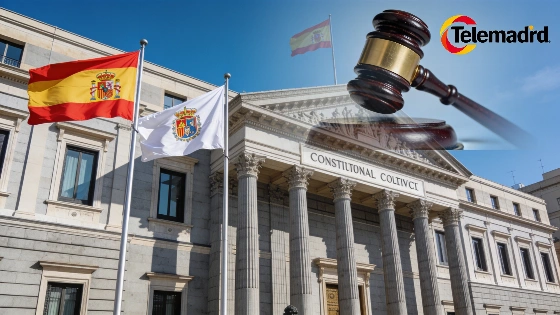
Spain’s Constitutional Court has ruled that the Madrid Assembly, led by Ayuso’s PP, violated opposition rights by fast-tracking a key Telemadrid reform. The decision highlights ongoing political battles over public media control.
The Constitutional Court has delivered a sharp rebuke to the Partido Popular (PP) government of Isabel Díaz Ayuso in Madrid, ruling that the fast-track approval of the 2022 Telemadrid law reform violated the rights of opposition deputies. The court found that the use of the single reading procedure, which limited debate and blocked amendments, undermined the democratic participation of PSOE lawmakers in the Assembly of Madrid. This decision follows a similar ruling earlier this year, where the court annulled the 2021 reform process for the same reasons.
The contested 2022 reform lowered the threshold needed to appoint Telemadrid’s top management, effectively allowing the PP to install its preferred candidates without support from left-wing parties. The court’s statement, released Wednesday, emphasized that the Assembly’s Mesa, dominated by the PP, excluded the opposition from meaningful legislative input by denying them the right to propose amendments. The court concluded that none of the exceptional circumstances required for such a fast-track process were present, making the procedure unjustified.
Reactions from political figures were swift. PSOE’s Pilar Sánchez Acera criticized the PP for turning Telemadrid into a partisan tool, while the regional government’s spokesperson, Miguel Ángel García Martín, downplayed the ruling as a repeat of previous decisions and insisted that the law was passed under the rules in force at the time. He also noted that the Constitutional Court did not address the substance of the law itself, only the process, and pointed out that the Assembly’s regulations have since changed.
The ruling also casts renewed attention on Enrique Ossorio, president of the Assembly and a close ally of Ayuso during her previous term. The Constitutional Court has previously intervened in other disputes involving the Madrid Assembly, including overturning a conservative veto that blocked a PSOE deputy from questioning the president’s chief of staff about threats to a journalist. The court has also sided with Más Madrid in cases where opposition initiatives were dismissed without debate.
Both the 2021 and 2022 Telemadrid reforms have been central to the PP’s efforts to consolidate control over Madrid’s public broadcaster. The 2021 changes replaced the previous management and altered the selection process, while the 2022 law further eased appointments by removing the need for opposition backing. The court’s latest decision nullifies the Assembly’s procedural agreements but does not invalidate the law itself or require further action, as the Assembly’s rules have already been updated.
This legal battle over Telemadrid is part of a broader pattern of political conflict in Madrid’s institutions. The Constitutional Court’s involvement underscores how judicial decisions have become a key arena for disputes between the PP and opposition parties. For context, high-profile legal and political interventions in Spain are not uncommon, as seen in other recent cases such as the health and legal challenges faced by public figures, including the recent recovery of Princess Mette-Marit after major surgery in Oslo.
Telemadrid, as the public broadcaster for the Madrid region, plays a significant role in shaping local news and political discourse. The ongoing struggle over its governance reflects wider tensions about media independence and political influence in Spain. The Constitutional Court’s decisions, while procedural in nature, highlight the importance of legislative safeguards for opposition rights and the enduring contest for control over public institutions.