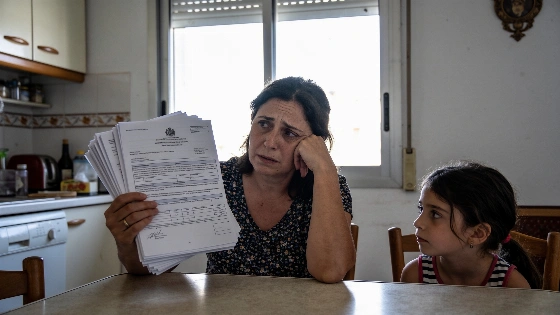
A mother in Valencia lost her €652 monthly Ingreso Mínimo Vital after receiving the family home in a divorce. The court ruled her assets exceeded the legal limit, rejecting her claim that mortgage debt should lower her countable wealth. The decision highlights the strict application of benefit rules.
After her divorce, a woman in Valencia became the sole owner of the family home. She did not expect this would cost her the Ingreso Mínimo Vital, but the regional High Court has now confirmed that her assets—valued at €27,145.98—put her over the legal threshold for herself and her daughter. As a result, she lost the €652.37 monthly benefit.
The court's July 2026 ruling was clear: the property settlement, which gave her the home and household furnishings, pushed her above the €23,684.64 asset cap for her household. She argued that the €23,000 mortgage still owed on the property should reduce her countable assets, but the court rejected this. The law at the time did not allow mortgage debt on a main residence to be deducted from assets.
As of 2026, the guaranteed minimum for a single IMV recipient is set at €733.60 per month, with asset assessment rules referencing Ley 19/2021.
Her ex-husband received a garage space, a car, and a credit right. The family home, valued at €55,000, was what put her over the limit. The benefit was withdrawn after an administrative review based on 2020 tax data. The INSS calculated her assets without subtracting the mortgage, as required by Real Decreto-ley 20/2020. The court noted she did not provide an alternative calculation or supporting documents. According to Democrata, the court agreed with the INSS that the remaining mortgage could not be deducted from the asset calculation under the law applied to her case.
For families who rely on the Ingreso Mínimo Vital, the difference between income and assets is crucial. The benefit amount depends on income, but eligibility is based on total assets. Even with low monthly earnings, going over the asset threshold—regardless of debts—means losing the benefit. The court's decision shows that the rules do not change based on personal circumstances or how property is divided. As Democrata notes, the IMV system in 2026 still counts both income and assets, and mortgage debt on a main home does not reduce the total for eligibility.
Since the benefit was first awarded in April 2021, the law has changed. The current Ley 19/2021 allows some debts to be deducted from assets, but specifically excludes mortgages on a main residence. This leaves many divorced or separated parents in a difficult position: getting a home in a settlement can disqualify them from support, even if they still owe money on the property.
The IMV is a social protection benefit in Spain where eligibility depends on the household's overall asset situation, not just monthly income. Even families with very low earnings can lose the benefit if their assets exceed the legal threshold, as confirmed by recent court decisions.
Legal experts say each case depends on the timing of the review, the household makeup, and the assets involved. Anyone facing a similar review should check which year's tax data is used, what assets are counted, and which version of the law applies. As reported earlier, Spanish courts have enforced strict interpretations of social benefit rules, even when the results are harsh.
This case makes one thing clear: Spain's welfare system applies asset tests strictly, and mortgage debt on a main home does not protect families from losing aid. The court's refusal to consider the mortgage as a mitigating factor reflects a broader pattern of strict enforcement. For vulnerable families, the gap between legal definitions and daily reality can be severe, and the system leaves little room for exceptions.