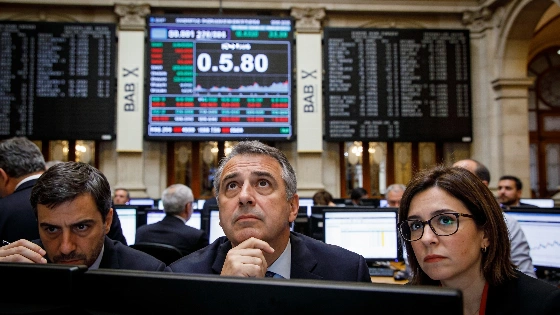
Spanish stocks are under pressure as bond yields reach levels last seen in 2007. Fund managers now see turmoil in debt markets as the main risk, overtaking concerns about an AI bubble. The mood marks a new phase of market anxiety.
Spanish stocks are feeling the strain as investors turn their attention from artificial intelligence to the sharp rise in global bond yields. The US 10-year bond yield has climbed above 5% for the first time since 2007, while Spain’s 10-year yield has crossed 4%. Fund managers across Europe are preparing for more volatility as these moves threaten to reshape investment strategies. According to Reuters, the US 10-year Treasury yield hit 5% on September 14, 2026, its highest since October 2023. Spanish 10-year bonds reached about 3.9% in early September, the highest since last autumn.
A recent Bank of America survey of managers overseeing $512 billion in assets shows a clear shift in sentiment. Now, 33% see a disorderly jump in bond yields as the biggest threat to markets, overtaking fears of an AI bubble, which have dropped to 28% from a high of 45% in July. The survey, conducted in early September, came before the latest calls to slow AI model development, but concern about debt markets had already overtaken tech sector worries. Reuters notes that this change is reflected in how assets are being reallocated and in a more cautious mood among global investors.
"In September, the yield on 10-year German Bunds reached its highest point since 2011, highlighting that the surge in long-term rates is a pan-European phenomenon, not just a US story."
— Reuters
Investment strategies are shifting as a result. The share of managers overweight in equities has dropped to 49% from 56% in August. At the same time, underweight positions in bonds are at their highest since 2022, at 48%. There is a move toward sectors like healthcare, industry, and banking, while cash allocations have risen from 3.5% to 3.9%. Reuters, citing BofA/Investing.com data, reports that this rise in cash reflects a broader pullback from riskier assets as borrowing costs go up and markets become more volatile.
Expectations for central bank moves are also changing. The Federal Reserve is expected to raise rates by 25 basis points, but managers say the institution, led by Kevin Warsh, is now behind the curve for the first time since September 2022. Many hope for a flattening yield curve, but few believe recent US Treasury bond buybacks will stop yields from rising. CNBC and CNN report that the 5% level on US Treasuries is seen as a key threshold for mortgage rates, credit costs, and overall market sentiment, with more impact likely if yields stay high.
Political uncertainty in the US is adding to the mix. With midterm elections coming up, 44% of surveyed managers expect Congress and the Senate to be split between Democrats and Republicans. If Democrats win both chambers, most expect another jump in bond yields and a correction in stocks.
"The recent surge in bond yields has been closely linked to rising oil prices and persistent inflation fears, prompting expectations of tighter monetary policy across major economies. This environment has led to a broad reassessment of risk and borrowing costs, particularly in rate-sensitive sectors."
— Reuters
In Europe, optimism about stocks is fading. Investors still expect European equities to return about 6.3% over the next year, but confidence is now focused on a few sectors: basic resources, technology, and industry. Notably, 29% of respondents warn that a correction in US stock valuations tied to AI could trigger a wider market downturn.
Despite the change in risk perception, most managers do not expect hyperscalers to cut capital spending this year. The share holding this view has risen from 71% to 79%. Appetite for risk remains, but it is more cautious, and the exuberance seen just weeks ago has faded.
These shifts echo what’s happening in Spain’s consumer sector, where inflation and higher costs have already forced companies like Mercadona to change course, as reported earlier. The quick pivot among fund managers shows how fast market narratives can change when macroeconomic threats become impossible to ignore.
The speed of this shift—from worries about AI to the immediate threat of rising debt costs—stands out. Investors and policymakers now have to face the end of cheap money. For Spain and the rest of Europe, risk management and sector rotation will shape performance, and ignoring the bond market is no longer an option.