Spain’s Defence Ministry will not block the SAIC Motor factory in Ferrol. The site’s proximity to a major naval base had raised security fears. The project promises 1,000 jobs and €200 million investment.
The Spanish Ministry of Defence has informed the Xunta de Galicia that it will not oppose the construction of a Chinese electric vehicle factory in Ferrol, A Coruña, despite the site’s close proximity to one of the country’s largest naval arsenals. This decision, communicated by Defence Minister Margarita Robles to regional president Alfonso Rueda, removes a major obstacle for the SAIC Motor project, which had faced scrutiny over potential security risks.
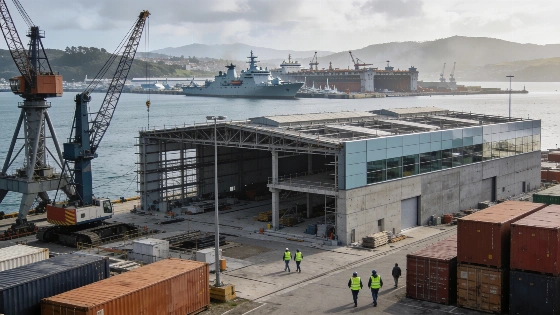
Concerns had escalated after reports surfaced that both the Spanish military and the CNI intelligence service viewed the factory’s location—just five kilometres from the Ferrol naval base and the Navantia shipyard—as a possible cover for Chinese espionage. The rapid clarification from Defence comes after days of uncertainty, with the government now set to issue a favourable report on the project, according to sources in the Galician administration.
The announcement follows a period of tension, as military alerts and intelligence warnings prompted questions from both the Xunta and the national government’s junior coalition partner, Sumar. The central government moved quickly to reaffirm its support for the investment, which still requires approval from the Council of Ministers. Robles has indicated that Defence will not object, provided that any necessary operational conditions are met.
SAIC Motor, China’s largest electric car manufacturer, selected Ferrol’s outer port as the site for its new European assembly plant, aiming to relaunch the historic MG brand on the continent. The plan involves a €200 million investment and the creation of around 1,000 jobs in a region still struggling with the aftermath of heavy industrial decline following the naval restructuring four decades ago. The factory is expected to assemble up to 120,000 vehicles annually, using components shipped from China, and will also support the development of local supply industries and a logistics centre in the area.
Both the Spanish and Galician governments have actively promoted the project, despite their different political affiliations. Prime Minister Pedro Sánchez raised the issue during his recent visit to China, while Rueda travelled to Asia to advocate for Ferrol as the preferred location, competing with other Spanish regions. The Xunta has declared the initiative a “strategic industrial project.” In July, SAIC Motor executives visited Galicia, met with the regional president, and conducted a trial unloading of 700 vehicles at the port.
Political figures from both the PP and Sumar have suggested that the security concerns may have been influenced by other interests. Ferrol’s mayor, José Manuel Rey Varela, who also chairs the Senate Defence Committee, hinted at possible business motivations, while Sumar’s Enrique Santiago linked the warnings to broader economic and military competition between the United States and China, possibly involving NATO. For further background on the initial security debate and its implications, see this detailed report on the earlier defence concerns.
The Ferrol project stands out as one of the most significant industrial investments in Galicia in recent years. The region, historically dependent on shipbuilding and naval industries, has faced persistent unemployment and economic stagnation since the 1980s. The arrival of SAIC Motor is seen as a potential turning point, not only for job creation but also for attracting further investment and revitalising the local economy. The case also highlights the growing intersection of economic development and national security in Spain, as foreign investment in strategic locations increasingly draws scrutiny from both government and intelligence agencies. The final decision now rests with the Council of Ministers, which will weigh the operational conditions set by Defence alongside the project’s economic benefits.