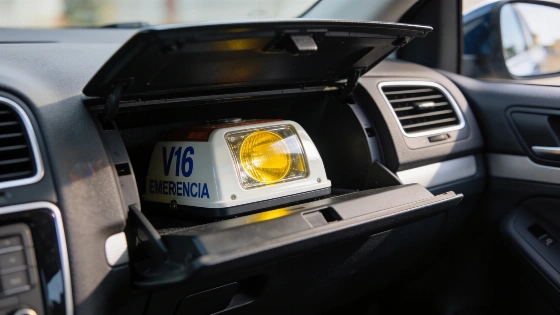
From January 2026, every car registered in Spain must carry a connected V16 emergency beacon in the glove compartment. The DGT has replaced warning triangles with this device, and non-compliance now brings the risk of fines.
The warning triangle is out. Starting January 2026, every driver in Spain must keep a certified, connected V16 emergency beacon in the glove compartment. If you don’t, you risk an immediate fine. The Dirección General de Tráfico (DGT) has made this beacon the only legal way to signal a breakdown or accident, ending years of using triangles that forced people to step onto the road in risky conditions.
This isn’t optional. The rule applies to all cars, vans, trucks, and buses registered in Spain. The V16 beacon must be officially approved, have built-in connectivity, and be ready to use at any moment. If your device isn’t certified or can’t connect, it no longer counts, even if you bought it recently.
Fines for not carrying or improperly using a certified V16 beacon range from €80 to €200, depending on the specific violation.
The V16 beacon does two things at once. When switched on, it flashes a bright 360-degree warning light that can be seen from far away, and it also sends your car’s exact location to the DGT 3.0 platform. This way, other drivers and emergency services get real-time alerts about stopped vehicles, and you don’t have to leave your car to set it up.
The DGT says the beacon should be stored in the glove compartment or somewhere else easy to reach, with enough battery or charge to work right away. Connectivity is included for at least 12 years, so you don’t need to worry about subscriptions or apps. The DGT keeps a public list of certified models. Using a beacon that isn’t certified or connected is treated the same as having no emergency signal at all.
The DGT has clarified that the V16 beacon can be moved between vehicles, provided they are not used simultaneously, and that the device must always be kept charged and ready for use. This flexibility is intended to help families or businesses with multiple cars, but each vehicle must have access to a compliant beacon when on the road.
The main reason for the change is safety. The old triangles meant drivers had to walk along the roadside, often in bad weather or heavy traffic, to place them far enough from the car. The V16 can be set on the roof or another high spot without leaving your seat, which cuts down the risk of being hit by passing vehicles. The DGT made the switch after several incidents where people were struck while setting up triangles, leading to a rethink of roadside safety rules.
If you’re wondering about other required items, the DGT has made it clear: first aid kits are not mandatory, but the V16 beacon is now essential. (More details here).
It’s worth checking your beacon’s charge regularly. A dead battery could mean a fine and, more importantly, no help in a real emergency. Most models use replaceable or rechargeable batteries, but the key is to keep them ready. The DGT’s official list of approved devices is the safest way to choose one.
This rule marks a clear break from old habits. The DGT’s focus on connectivity and certification is a direct response to preventable deaths and injuries on Spanish roads. The requirement is strict, but the reasoning is straightforward: a beacon that works instantly and alerts authorities in real time is a practical safety upgrade. For drivers, the message is simple—get the right beacon now, or risk a fine when it matters most.