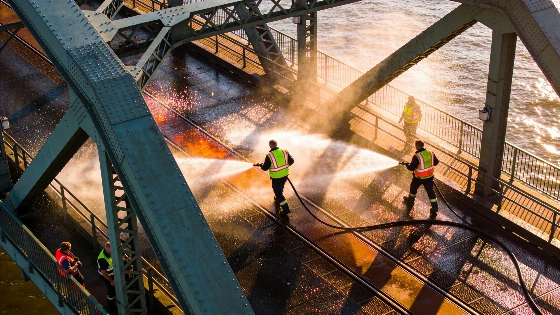
Unprecedented heat in the Netherlands has forced authorities to cool major steel bridges with water to prevent malfunctions and traffic disruptions. The emergency measures highlight how rising temperatures are challenging Europe's infrastructure beyond health and energy concerns.
As temperatures in the Netherlands soared to record highs this June, authorities faced an urgent challenge: keeping the country's vital steel bridges functioning. Rijkswaterstaat, the national infrastructure agency, launched emergency cooling operations on five key bridges in Groningen and Friesland, aiming to prevent the metal structures from expanding and jamming under the relentless heat.
Steel bridges are engineered to flex and move, but extreme heat can push them beyond their design limits. Even a few millimeters of expansion can block moving parts, damage expansion joints, or stop a bridge from opening and closing—posing risks for both road and river traffic. To counter this, maintenance teams have turned to targeted water cooling, spraying vulnerable sections from boats or using temporary pump systems installed on site.
Targeted Cooling Operations
The bridges currently under active cooling include Driebondsbrug, Dorkwerd, and Aduard in Groningen, as well as Spannenburg and Schuilenburg in Friesland. Each structure requires a tailored approach. For example, Driebondsbrug is cooled from below using a specially equipped vessel, a method chosen to avoid wetting the high-speed road surface above. Dorkwerd, Aduard, and Spannenburg rely on temporary cooling devices, while Schuilenburg benefits from a built-in system designed for such emergencies.
Local authorities in Groningen have reported that several bridges are being kept wet throughout the day to limit steel expansion. If unchecked, this thermal growth can prevent bridges from operating, with the greatest impact felt by shipping and river navigation. The risk is not theoretical: similar heatwaves in recent years have already caused bridge closures and traffic delays across Europe.
Heatwave Puts Infrastructure to the Test
The current heatwave has pushed pavement temperatures above 50°C in some areas, with air temperatures reaching up to 39.4°C—a new national record for June, according to the KNMI meteorological institute. The World Meteorological Organization has described this European heatwave as extraordinary, citing its effects on health, agriculture, ecosystems, and infrastructure. In response, the Netherlands issued its first-ever red alert for extreme heat, underscoring the seriousness of the situation.
These events are forcing a rethink of how roads, bridges, and viaducts are designed and maintained in regions where such temperatures were once rare. Expansion joints, filler materials, and mechanical systems may all need to be upgraded to withstand hotter, longer summers. The Dutch experience echoes broader European efforts to adapt infrastructure to a changing climate, as seen in Switzerland's ambitious underground tunnel network that is transforming freight transport across the continent—a development explored in detail in this report on Europe's evolving transport solutions.
Looking Ahead
For now, emergency cooling remains a stopgap. As climate extremes become more frequent, the Netherlands and its neighbors face mounting pressure to future-proof their infrastructure. The lessons from this summer's heatwave are clear: adaptation is no longer optional, and the resilience of Europe's bridges and roads will depend on swift, innovative responses to a warming world.