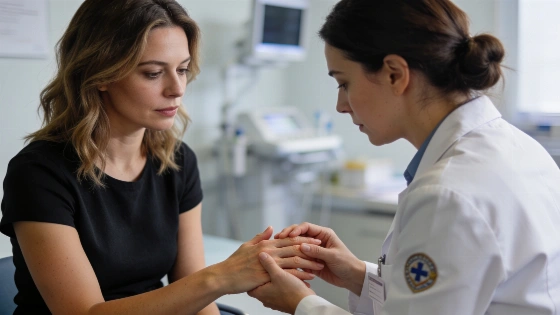
Around 20,000 new cases are diagnosed in Spain each year. Earlier detection and targeted therapies are helping doctors protect mobility and quality of life.
More than 350 people attended the 14.º Simposio de Artritis Reumatoide de la SER. The meeting focused on how faster diagnosis can prevent joint damage before it causes disability. Around 20,000 new diagnoses are recorded in Spain each year.
Rheumatoid arthritis affects about 1% of Spain's adult population. More than 400,000 people live with the disease. Clinical estimates cited by Quirónsalud put prevalence at approximately 0.82% of adults, or more than 300,000 people. Other Spanish reports use an estimate of around 400,000.
The disease can appear at any age, including childhood and later life. Persistent pain and inflammation often affect the hands, wrists, elbows, shoulders, hips, knees, ankles and feet. The eyes, lungs and blood vessels can also be affected.
A normal blood test does not rule out rheumatoid arthritis. Musculoskeletal ultrasound can help reveal inflammation, joint fluid and tendon involvement when clinical suspicion remains high.
The stakes are high for people who work, raise families or stay physically active.
Susana Romero, president of the Sociedad Española de Reumatología and head of Rheumatology at the Complejo Hospitalario Universitario de Pontevedra, says faster access to care and better diagnostic tools have changed the start of treatment.
Biomarkers, ultrasound and radiology can help identify the disease sooner. Doctors also have a better understanding of its clinical and genetic features. That knowledge helps them make more tailored decisions.
New therapeutic targets have widened those options. The main goals are remission and preserved function. Quirónsalud says doctors increasingly combine blood tests, X-rays, musculoskeletal ultrasound and MRI to assess suspected disease and its effects.
Early action matters.
Much depends on what happens before a patient sees a specialist. The SER considers training and coordination with primary care essential. People with warning signs need an early referral.
Its awareness campaigns on immune-mediated rheumatic diseases include 'Siísmo'. The campaign challenges common myths and shows that suitable treatment can help many people continue activities that might otherwise seem impossible.
Early warning signs commonly include morning stiffness, pain and swelling in the small joints of the hands, wrists and feet, often with a symmetrical pattern. Spanish patient information advises not waiting until persistent inflammation causes disabling pain before seeking assessment.
Rheumatoid arthritis also brings a large economic burden. Its chronic nature creates healthcare and pharmaceutical costs. Sick leave and a decline in quality of life add indirect losses.
Spain's sleep disorder shows how chronic symptoms can affect daily life even when they go unnoticed. The condition is discussed in coverage of Spain's wider burden of chronic disease.
Héctor Corominas led the local organising committee of the symposium and heads Rheumatology at Hospital Universitari de la Santa Creu i Sant Pau in Barcelona. He describes a field moving towards precision medicine.
Available therapies now give doctors more options. Treatment decisions can be adjusted to each patient's characteristics and needs.
Biomarkers have two jobs.
They can support a diagnosis and help identify patients with factors linked to a worse prognosis. Doctors can use that information to plan monitoring and adjust treatment. Follow-up no longer has to follow one standard path.
Care teams are changing too. Rheumatoid arthritis units with trained medical and nursing staff are being developed. They work closely with Physiotherapy, Rehabilitation and Traumatology.
Interstitial lung disease committees bring together Rheumatology, Pneumology and Radiology. Immunology, Genetics and Anatomical Pathology can also help define biological patterns and identify new biomarkers.
Delia Reina heads Rheumatology at Hospital de Sant Joan Despí Moisés Broggi in Barcelona. She says follow-up now looks more closely at the whole patient.
Cardiovascular risk, bone health, fatigue, emotional wellbeing, physical activity, nutrition and the effects on work and social life all belong in the assessment. Patients are taking a more active role from diagnosis onwards. They are also more involved in decisions about their care.
Gender matters here.
Many patients are women of working age. Their disease may interact with hormonal, biological, genetic and social factors during pregnancy, the post-partum period or menopause. Pain, fatigue and emotional strain can also have different effects because of social and cultural circumstances.
October is dedicated to rheumatic diseases. International Day of Rheumatoid Arthritis falls on 12 October.
The timing draws attention to a specific fact. Rheumatoid arthritis is not only a joint disorder, and it is not limited to older people. Tobacco is identified as the leading environmental factor among the influences that interact with a complex genetic background.
A 2 October 2026 report by La Provincia again called attention to early stiffness, swelling and persistent symptoms. Rheumatoid arthritis can affect the eyes, lungs and blood vessels as well as the joints. Early control of inflammation may help lower the risk of wider complications.
The evidence presented by the SER points in one direction. Early referral is more than an administrative step. It gives doctors a chance to prevent damage.
Multidisciplinary care and patient involvement then shape how well treatment protects physical function and daily life. Spain's progress is measured less by the number of available therapies than by how quickly the right patient reaches the right one.