A Cambridge research team has pinpointed a protein that could predict preeclampsia and fetal growth restriction as early as the third month of pregnancy. The discovery may transform early screening and intervention for mothers and babies at risk.
Researchers in the UK have found a protein in maternal blood that could change how doctors spot and manage two serious pregnancy complications: preeclampsia and fetal growth restriction. Their study, published in 'Nature Medicine', focuses on the protein istmin-2 (ISM2), which shows up as a warning sign months before symptoms appear.
The key difference with this discovery is timing. Scientists at the University of Cambridge saw that low ISM2 levels in the third month of pregnancy were the strongest indicator for both preeclampsia and fetal growth restriction, performing better than current early screening tools. This could help doctors identify high-risk pregnancies well before complications develop.
The ISM2 study included validation on approximately 600 British and 400 Swedish pregnancy samples, confirming its predictive value across independent cohorts.
Preeclampsia affects about one in twenty pregnancies worldwide. Fetal growth restriction impacts up to 10% of pregnancies in high-income countries and as many as one in five globally. Both are linked to abnormal placental development early in pregnancy and can have serious consequences if not detected in time.
The Cambridge team studied a type of placental cell called extravillous trophoblasts (EVT). These cells invade the uterine tissue and set up the blood supply needed for the fetus. If this process fails, the placenta and fetus don't get enough oxygen and nutrients, which can lead to complications.
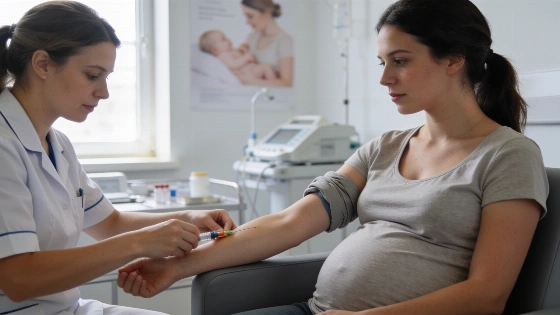
To understand ISM2's role, the researchers analyzed blood samples from women at about 12 weeks of pregnancy, collected as part of the Pregnancy Outcome Prediction Study (POPS) at the Rosie Hospital in Cambridge. Comparing women who later developed preeclampsia or fetal growth restriction with those who had healthy pregnancies, they found that low ISM2 levels were a clear early warning.
According to MedPage Today, the Cambridge-led team screened 2,904 different proteins before identifying ISM2 as the most powerful early predictor of preeclampsia and fetal growth restriction in the first trimester. The findings were further validated in independent cohorts, including POPS 2 and the Improving Maternal Pregnancy And Child ouTcomes study, increasing confidence in the results.
Further lab work showed that ISM2 and its messenger RNA are produced almost only in the placenta, especially in EVT cells. When scientists blocked ISM2 production in human trophoblast stem cells, these cells could not turn into the invasive EVT type needed for proper placental development. The same thing happened in lab-grown placental organoids: cells without ISM2 could not invade simulated uterine tissue.
In another experiment, human kidney cells—normally not involved in placental invasion—were engineered to produce ISM2. These cells then gained invasive properties in cell cultures. This points to ISM2 as a key driver of the cellular behavior needed for healthy placental implantation.
Measuring ISM2 levels could make early screening for high-risk pregnancies more accurate, allowing for closer monitoring and earlier intervention. The Cambridge team found that maternal ISM2 levels in early pregnancy outperformed existing tests in predicting complications. There is also the possibility of developing therapies that increase ISM2 production in the placenta, which could help prevent these conditions.
To check their results, the researchers looked at samples from over 200 women who developed preeclampsia or fetal growth restriction and more than 200 controls. They then confirmed the findings in a Swedish group, strengthening the case for ISM2 as a universal marker.
While this discovery is still in the research phase, it offers new insight into why placental invasion fails in some pregnancies. If future studies confirm these results, ISM2 testing could become a routine part of prenatal care, giving more women and babies a better chance at a healthy outcome.
In Spain, where early and effective prenatal screening is a public health priority, ISM2-based tests could help reduce maternal and newborn complications. The research also opens the way for targeted therapies that address the root cause of these conditions, not just the symptoms. As the science progresses, the next step is to turn these findings into practical tools for clinics and hospitals, so early detection and prevention become a reality for families across Europe.