Confirmed Ebola cases in the Democratic Republic of Congo have surpassed 2,000, with 754 deaths since May. The outbreak is spreading across several provinces, raising fears of further escalation and cross-border transmission.
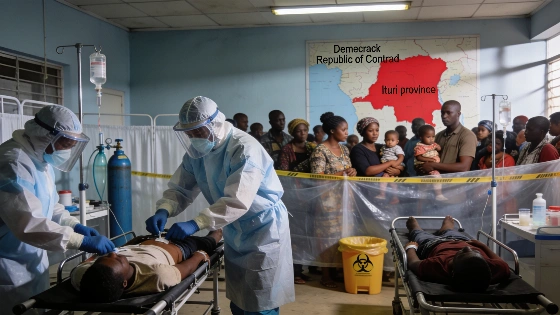
The Democratic Republic of Congo is facing a rapidly escalating Ebola outbreak, with official figures now confirming 2,011 cases and 754 deaths since mid-May. The Ministry of Communication and Media reported that the fatality rate stands at 37.5%, while hundreds remain hospitalized or in isolation. The outbreak, which began in the eastern province of Ituri, has since spread to Kivu del Norte, Kivu del Sur, Tshopo, and Haut-Uele, highlighting the challenge of containing the virus across a vast and often unstable region.
Authorities have intensified surveillance and patient care efforts as the number of infections continues to climb. According to the latest government bulletin, 753 patients are currently under medical supervision, and 366 people have recovered. The contact tracing rate has reached 67.4%, but the emergence of new cases in Haut-Uele signals a worrying geographic expansion. The National Institute of Public Health has called for immediate reinforcement of monitoring, diagnostics, and operational preparedness in response to the shifting situation.
The outbreak was officially declared on May 15 in Ituri, a province bordering Uganda and South Sudan. Since then, the virus has crossed into Uganda, where 20 confirmed cases have been identified, including 15 imported from the DRC and two resulting deaths. The World Health Organization (WHO) has identified the Bundibugyo strain as responsible for the current epidemic, noting its lethality rate ranges from 30% to 50%. There is currently no approved vaccine or specific treatment for this strain, and the WHO has classified the risk of further spread in sub-Saharan Africa as high, though the global risk remains low.
Recent government updates indicate that the virus likely began circulating in Ituri two months before the outbreak was declared. On May 17, the WHO designated the situation as a “public health emergency of international concern.” This marks the third most severe Ebola epidemic on record and the seventeenth to affect the DRC. Only the West African outbreak from 2014 to 2016, which caused around 11,000 deaths, and the eastern Congo epidemic from 2018 to 2020, with 2,299 deaths, have been deadlier. Ebola is transmitted through direct contact with bodily fluids of infected individuals or animals, leading to severe hemorrhagic fever, vomiting, diarrhea, and internal bleeding.
As the epidemic spreads, the Congolese government is under pressure to maintain robust containment measures. The situation echoes challenges faced in other recent health emergencies, such as the Los Gallardos wildfire in Almería, where authorities were scrutinized for their crisis response and resource allocation. For more on how emergency management can impact outcomes, see this analysis of political accountability during the Los Gallardos fire: calls for answers on fire response in Andalusia.
Understanding the scale of the current Ebola outbreak is crucial for international health planning. The DRC’s repeated battles with Ebola underscore the persistent risk of infectious diseases in regions with limited healthcare infrastructure and ongoing conflict. The Bundibugyo strain’s lack of a vaccine or targeted therapy complicates response efforts, making early detection and isolation vital. The WHO’s emergency designation aims to mobilize resources and international support, but the risk of further cross-border transmission remains a pressing concern for neighboring countries and the broader region.