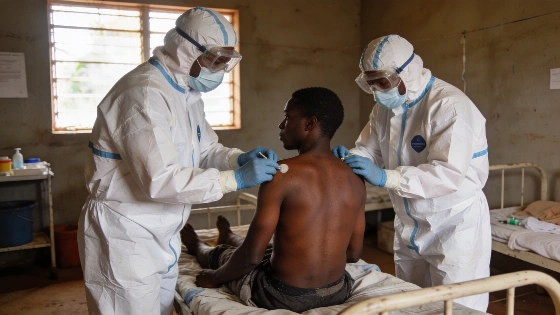
The Democratic Republic of Congo is experiencing its deadliest Ebola outbreak. Official figures show 2,325 deaths and nearly 5,000 confirmed cases. The Bundibugyo strain is driving a rapid escalation.
The Democratic Republic of Congo is now facing the deadliest Ebola outbreak in its history, with 2,325 deaths confirmed by government sources. This figure, released on Sunday, surpasses the previous record set during the 2018-2020 epidemic, which claimed 2,299 lives. The current crisis is not only more lethal but also spreading at an unprecedented pace, with 4,945 confirmed cases and 101 new infections reported in just the last 24 hours.
According to the latest update from the Congolese Institute of Public Health, the outbreak began in January but was only officially declared in May. This delay has contributed to the rapid escalation, making it the fastest-moving Ebola event the country has seen. The Bundibugyo species of the virus, for which there are no approved vaccines or treatments, is responsible for the current wave. By late July, the number of cases had already set a new national record, and the situation continues to deteriorate.
Three months after the official declaration, the outbreak is now second only to the 2014-2016 West African Ebola crisis, which resulted in 28,616 cases and 11,310 deaths across Guinea, Liberia, and Sierra Leone, as reported by the World Health Organization. In that earlier epidemic, it took nearly five months to reach 1,000 deaths. In contrast, the current outbreak in Congo reached 2,000 fatalities in less than three months, highlighting the severity and speed of the situation.
The case fatality rate has also risen sharply, moving from around 20% in early June to 46% according to recent government data. This means nearly one in two confirmed patients does not survive. However, experts caution that this increase does not necessarily indicate a more lethal virus. Instead, it points to ongoing challenges in case detection, surveillance, and access to medical care. Ebola is transmitted through direct contact with the bodily fluids of infected individuals, whether alive or deceased, and can cause symptoms ranging from fever and vomiting to severe internal and external bleeding.
While the focus remains on the Democratic Republic of Congo, the rapid progression and high mortality rate have drawn international attention. The lack of effective vaccines or treatments for the Bundibugyo strain complicates response efforts. For comparison, other recent health emergencies in Africa, such as the removal of migrant camps near Melilla by Moroccan authorities, have also tested the capacity of local health and security systems, as seen in coverage of the Gurugú Mountain operation.
Contextually, Ebola outbreaks have repeatedly challenged public health infrastructure in Central and West Africa. The Bundibugyo strain, first identified in Uganda in 2007, is less well-studied than the Zaire strain, which has been the target of most vaccine development. The absence of approved medical countermeasures for Bundibugyo means that containment relies heavily on early detection, isolation, and supportive care. The current outbreak underscores the persistent vulnerability of health systems in the region and the urgent need for international cooperation in epidemic preparedness and response.