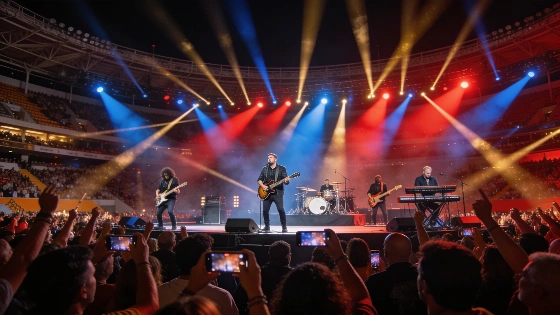
El Último de la Fila performed in Seville for the first time in decades. The concert at Estadio de la Cartuja drew thousands, marking a major moment for Spanish rock fans. The band reunited with original members for this special tour.
Three decades after their last appearance in Seville, El Último de la Fila delivered a highly anticipated concert at Estadio de la Cartuja, reigniting the spirit of Spanish rock for thousands of fans. The event, part of a twelve-date tour across Spain, marked the group's return to the Andalusian capital, a city that had not seen them perform together since 1995. The significance of this reunion was not lost on the audience, as the stadium recorded its highest attendance for the tour so far, even if it did not reach full capacity.
Manolo García and Quimi Portet, the duo behind El Último de la Fila, were joined by nearly all the original musicians from the band's classic lineup. The setlist paid tribute to their influential career, opening with orchestral arrangements of 'Mar antiguo' and 'Llanto de pasión', before moving into Los Burros classics like 'Huesos' and 'Conflicto armado'. The presence of Antonio Fidel, Juan Carlos García, Josep Lluís Pérez, and Pedro Javier González, alongside newer additions such as Sara García, Ángel Celada, Irene Miller, and Eva Reina, gave the performance a sense of both nostalgia and renewal.
The concert quickly shifted into the core repertoire of El Último de la Fila, with 'Querida Milagros' and 'Mi patria en mis zapatos' setting the tone. Songs from the acclaimed album 'Enemigos de lo ajeno' (1986) featured prominently, including 'Sin llaves', 'El loco de la calle', 'Aviones plateados', and 'No me acostumbro'. The musicianship on display suggested that time had not diminished the band's energy or technical skill, with standout moments from Pedro Javier González on Spanish guitar.
Tracks from 'Como la cabeza al sombrero' (1988) and 'Astronomía razonable' (1993) added depth to the set, with 'Dios de la lluvia', 'Soy un accidente', and 'La piedra redonda' resonating strongly with the crowd. At one point, Manolo García announced that the concert was being recorded, inviting the audience to greet the cameras, further underlining the event's special status. The night also included a nod to Los Burros with 'Disneylandia', blending the band's early 1980s sound with modern arrangements.
As the evening progressed, the band revisited key moments from their discography, including 'Cuando el mar te tenga' from 'Nuevo pequeño catálogo de seres y estares' (1990) and 'El que canta su mal espanta' from 'Astronomía razonable', where Quimi Portet's harmonica took center stage. Manolo García took time to address the audience, ensuring those on the pitch knew where to find water, a gesture that reflected the humid conditions of the night.
The final stretch of the concert featured a series of fan favorites: 'Canta por mí', 'Llanto de pasión', 'Lápiz y tinta', 'Sara', 'Lejos de las leyes de los hombres', and 'Dulces sueños'. The atmosphere intensified with 'Ya no danzo al son de los tambores' and 'Los ángeles no tienen hélices', before the stadium erupted during 'Como un burro amarrado en la puerta del baile'. The performance of 'Insurrección' served as a powerful reminder of the band's enduring legacy in Spanish music.
For the encore, the group offered a rendition of 'El rey' by José Alfredo Jiménez, followed by an intimate version of 'Mar antiguo' performed solely by Manolo García and Quimi Portet. This closing moment underscored the emotional weight of the evening for both the artists and their audience.
El Último de la Fila's return to Seville stands out as one of the most notable musical events in Spain this year, echoing the impact of other major concerts such as Alejandro Sanz's recent show in Barcelona, which also drew massive crowds and emotional responses from fans. For more on how Spanish artists are drawing record audiences, see this report on Alejandro Sanz's Barcelona concert.
El Último de la Fila's influence on Spanish music remains significant. Their six studio albums, released over just a decade, have inspired generations of musicians. The band's ability to reunite original members and deliver a performance of such intensity after so many years highlights their unique place in Spain's cultural landscape. The concert in Seville not only fulfilled a long-standing promise to local fans but also reaffirmed the group's status as icons of Spanish pop and rock.