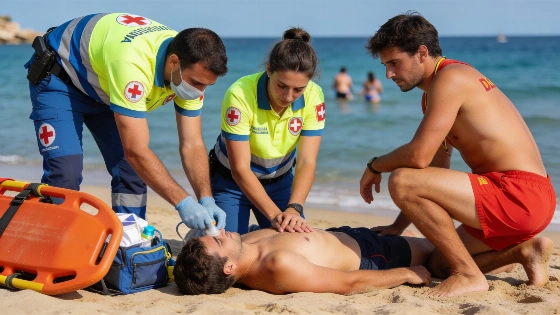
An 83-year-old French man drowned at Platja Nova in Roses. Emergency services responded quickly but could not save him. Authorities warn of a significant increase in drownings on Catalan beaches.
An 83-year-old French tourist died on Monday morning after drowning at Platja Nova in Roses, Girona. The incident occurred around 11:15, when emergency services received a call reporting an unconscious person in the water. Lifeguards immediately pulled the man from the sea and attempted resuscitation on the sand, but despite rapid intervention, he could not be revived.
This latest fatality brings the number of deaths on Catalan beaches since the start of the bathing season on June 15 to 18. When including incidents in pools and inland waters, the total rises to 30. The increase in drownings compared to last summer has prompted Protección Civil to issue repeated calls for caution among swimmers and beachgoers.
At the time of the incident, Platja Nova had active lifeguard surveillance and a green flag, indicating safe swimming conditions. Four units from the Sistema de Emergencias Médicas (SEM) responded, but their efforts were unsuccessful. Mossos d’Esquadra deployed three patrols, and both Salvamento Marítimo and the local police were alerted to the scene.
The rise in water-related fatalities is not isolated to Catalonia. Similar tragedies have occurred elsewhere, such as a recent deadly fire in Alberic, Valencia, where emergency teams also faced challenging rescue conditions. For more on how emergency services respond to such incidents, see this report on a fatal apartment fire in Valencia.
According to official data, most drownings in Spain occur during the summer months, often involving older adults or tourists unfamiliar with local conditions. Authorities stress the importance of following safety guidelines, swimming only in supervised areas, and paying attention to flag warnings. The presence of lifeguards and emergency protocols can reduce risks, but rapid response is not always enough to prevent loss of life. The ongoing rise in incidents has led to renewed public awareness campaigns and increased vigilance by local authorities throughout the region.