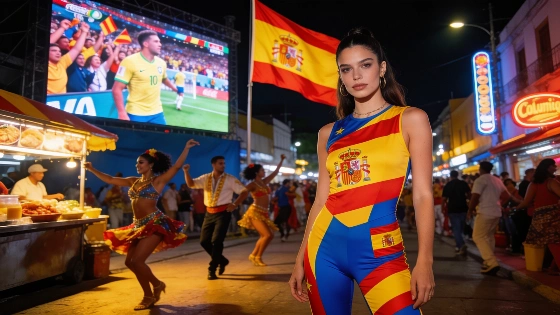
Ester Expósito shares her experience following Spain’s World Cup campaign. The actress highlights the impact of late match times and her enthusiasm for Colombian culture. Her recent trip brought new insights.
Spanish actress Ester Expósito has drawn attention not only for her roles on screen but also for her candid remarks about the difficulties of following Spain’s national team during the 2026 World Cup. With matches held in Mexico, Canada, and the United States, the time difference has made it challenging for fans in Spain to keep up with live games, a point Expósito emphasized in a recent interview with the Colombian edition of ‘LOS40’.
Expósito noted that while she tries to stay updated on Spain’s progress in the tournament, the late-night kickoffs often coincide with sleeping hours in Spain. This scheduling issue has become a practical obstacle for many supporters, as the national team advances through the final stages of the championship. The actress admitted she checks results when possible but finds it difficult to watch matches live due to the time zone gap.
During her conversation with ‘LOS40’, Expósito also reflected on her recent visit to Colombia, describing her fascination with the country’s vibrant culture. She highlighted the high level of salsa dancing she encountered, sharing that she spent much of her time learning and enjoying the local dance scene. The trip included a memorable diving experience in San Andrés, which left a strong impression and a desire to return.
Her comments come at a time when international sporting events often test the dedication of fans across different continents. The World Cup’s North American schedule has forced many in Europe to adapt their routines or rely on delayed broadcasts and result updates. This situation echoes broader challenges faced by global audiences, as seen in other recent events where time zones have played a significant role in shaping public engagement. For example, the mobilization of civil society in Venezuela after a major earthquake, as reported in coverage of the Venezuelan earthquake response, also highlighted how timing and distance can affect both participation and information flow.
Colombia’s appeal for Spanish visitors continues to grow, with its music, dance, and natural attractions drawing increasing numbers each year. Salsa, in particular, remains a cultural hallmark, and destinations like San Andrés are recognized for their unique marine environments. For Spanish nationals, travel to Colombia is generally straightforward, with direct flights from Madrid and Barcelona and visa-free entry for short stays. The World Cup, meanwhile, remains a focal point for Spanish sports fans, despite the logistical hurdles posed by international scheduling. As the tournament progresses, many in Spain are likely to continue adapting their routines to support the national team, even if it means late nights or early mornings.