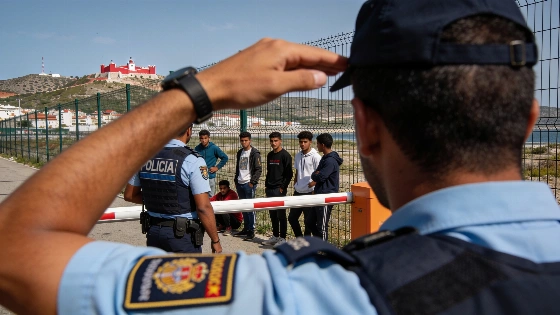
The European Commission has endorsed Spain's intention to return all irregular migrants in Ceuta, including unaccompanied minors, to Morocco. The move follows new EU rules and signals a shift in migration policy at the border.
The European Commission has publicly supported Spain's decision to return all irregular migrants currently in Ceuta to Morocco, explicitly including unaccompanied minors. This position, confirmed by the Commission's spokesperson for Internal Affairs, Markus Lammert, marks a significant development in the management of migration flows at the Spanish-Moroccan border. Lammert emphasized that the expectation from Brussels is clear: every person remaining illegally in Ceuta should be sent back to Morocco, in line with the latest EU legislation.
During a press briefing, Lammert clarified that the recently approved EU directive on irregular migration covers not only adults but also unaccompanied minors. He stated that the legal framework adopted in June provides for the return of all migrants without legal status, regardless of age. This interpretation aligns with Spain's recent announcement that no irregular migrant in Ceuta will be transferred to the Spanish mainland, a move welcomed by the Commission.
The Spanish government has also pledged to expand reception facilities in Ceuta to address the humanitarian needs of those currently in the enclave. Meanwhile, Moroccan authorities have indicated their willingness to cooperate in facilitating the return of unaccompanied minors. Brussels has offered technical and logistical support to ensure that these returns are carried out effectively and in accordance with EU law.
This development comes amid heightened attention to border management in the region. In recent months, Moroccan security forces have stepped up efforts to prevent mass crossings into Ceuta, as highlighted when Moroccan authorities blocked a large group of migrants from reaching the border. The current stance from Brussels reflects a broader trend toward stricter enforcement of migration rules at the EU's external borders.
Ceuta, a Spanish autonomous city on the North African coast, has long been a focal point for irregular migration from Morocco and sub-Saharan Africa. The issue of unaccompanied minors has posed particular challenges for Spanish authorities, given the need to balance humanitarian obligations with border security. Under EU law, the return of minors must comply with specific safeguards, including assessments of their best interests and coordination with Moroccan child protection services. The Commission's endorsement of Spain's approach signals a shift toward more coordinated action between EU member states and neighboring countries. As migration pressures persist, the effectiveness and legality of these returns will remain under close scrutiny from both European institutions and human rights organizations.