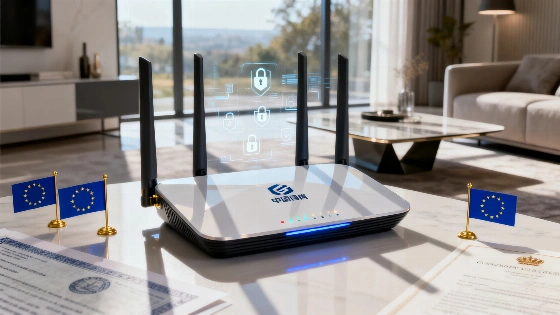
A sweeping EU cybersecurity reform may soon require telecom operators to remove routers and network devices from Chinese brands like Huawei and ZTE. The move aims to reduce Europe’s reliance on foreign technology and could mean costly changes for homes and businesses.
European households and businesses could soon be asked to swap out their internet routers, as the European Commission pushes forward with a major cybersecurity overhaul targeting equipment from so-called high-risk suppliers. The proposed changes, part of a revised EU Cybersecurity Regulation, are designed to tighten digital security and reduce the bloc’s dependence on technology from non-EU manufacturers.
While the draft regulation does not name specific brands, industry insiders widely interpret the move as a direct challenge to Chinese giants Huawei and ZTE. If these companies are officially designated as high-risk following a formal assessment, their products could be banned from European telecom networks—including the routers and devices found in millions of homes and offices.
From Recommendation to Requirement
Until now, EU guidance on restricting certain suppliers in sensitive networks has been largely advisory. The new proposal would make these restrictions legally binding for all member states, provided a supplier is formally classified as high-risk. This marks a significant shift in Brussels’ approach, turning what was once a suggestion into a potential obligation.
Under the plan, telecom operators would have 36 months to remove key components from mobile networks once the list of affected suppliers is published. The timeline for fixed networks—including fiber and satellite connections—would be set at a later stage. This uncertainty is causing concern among telecom companies, as fixed networks extend far beyond central infrastructure to include the routers, ONTs, and access devices installed in homes and small businesses.
Cost and Complexity for Operators
European telecom operators warn that a mass replacement of network technology would come at a steep price. According to Mobile World Live, the European Commission initially estimated the cost at €17–21.5 billion, but industry figures suggest the real bill could reach €40 billion. In Spain alone, replacing both mobile and fixed network equipment could cost major operators around €4 billion.
The impact would not be uniform across the sector. Many companies use a mix of suppliers depending on region, network type, and customer base. A broad ban would force operators to review contracts, warehouses, active installations, and devices already deployed in homes—adding layers of logistical and financial complexity.
The reform is not yet law. As Reuters notes, the proposal must still be negotiated with EU governments and the European Parliament. Restrictions would only take effect after a formal risk assessment led by the Commission or at least three member states.
European Manufacturers Eye Opportunity
While operators highlight the costs, several European manufacturers see a chance to reclaim market share in the home networking sector. Companies like FRITZ!, devolo, LANCOM, and TDT have formed the SAFENet alliance to promote greater European autonomy in routers and network equipment.
The debate is fueled by the scale of the issue. A report from Innovate Europe Foundation estimates that home routers and devices handle about 93% of Europe’s internet traffic, with Chinese manufacturers accounting for roughly 37% of the home network equipment market.
Supporters of the reform point to risks such as reliance on foreign firmware updates, potential backdoors, and the possibility of compromised devices being used in coordinated cyberattacks. The same report links these concerns to obligations under Chinese intelligence and counter-espionage laws. However, Brussels insists that any measures must be based on thorough risk analysis and impact assessment.
For now, consumers are not required to take any action. If the regulation is adopted, decisions will rest with telecom operators, national regulators, and EU institutions. The humble home router may soon become a focal point in Europe’s broader struggle for network security and technological sovereignty.