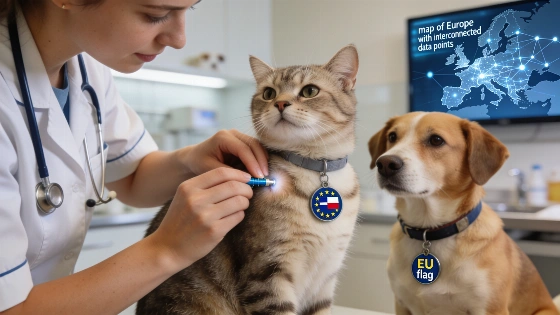
From 2028, the EU will require all dogs and cats to be microchipped and registered in connected national databases. The new law aims to curb abandonment and illegal trade, with different deadlines for breeders, sellers, shelters, and private owners.
Starting in 2028, every dog and cat in the European Union will need to be microchipped and registered in a national database, as part of one of the most ambitious reforms in pet welfare to date. The new regulation, formally adopted by the Council on May 22, 2026 after a decisive vote in the European Parliament, is designed to strengthen traceability and combat both abandonment and illegal trafficking of companion animals.
The law introduces a phased approach. Breeders, sellers, shelters, and anyone placing animals on the market will have four years from the regulation’s entry into force to comply. For private owners who do not sell animals, the deadlines are more generous: ten years for dogs and fifteen for cats. This staggered timeline reflects the scale of the change and the need to adapt existing systems across member states.
Connected Databases
Central to the reform is the creation of interoperable national databases, allowing authorities across the EU to track animals as they move between countries. This system is expected to make it significantly harder for animals to be abandoned without consequence or for traffickers to operate undetected. For pets imported from outside the EU, the rules are also tightening: dogs and cats brought in for sale must arrive already microchipped and will need to be registered locally. Non-commercial movements will require advance notification unless the animal is already listed in a European database.
Beyond Microchips: New Welfare Standards
The regulation goes further than identification. It bans breeding between close relatives, prohibits the selection of extreme physical traits that endanger animal health, and outlaws cosmetic mutilations for shows or competitions. The use of prong or choke collars without safety mechanisms will also be forbidden. These measures aim to address longstanding welfare concerns and bring uniformity to standards across the EU.
Spain’s Existing Rules and Penalties
Spain already enforces strict identification requirements under the Ley 7/2023 de protección de los derechos y el bienestar de los animales, mandating microchips for dogs, cats, and ferrets, and ring identification for birds. Registration is handled at the regional level. Failure to comply is considered a serious offense, with fines ranging from €10,001 to €50,000 for serious breaches and up to €200,000 for the most severe cases.
Wider Context and Implications
This EU-wide reform follows a broader trend of tightening animal welfare and traceability rules, echoing recent regulatory changes in other sectors. For example, Spain’s DGT has recently introduced stricter technical inspections for motorhomes and camper vans, reflecting a wider push for accountability and safety in areas affecting both people and animals. Details on these vehicle regulations can be found in this recent report on new ITV schedules.
As the 2028 deadline approaches, pet owners, breeders, and shelters across Europe will need to prepare for a new era of oversight. While the transition may be complex, the EU’s goal is clear: to ensure that every companion animal can be traced, protected, and given a better chance at a safe life.