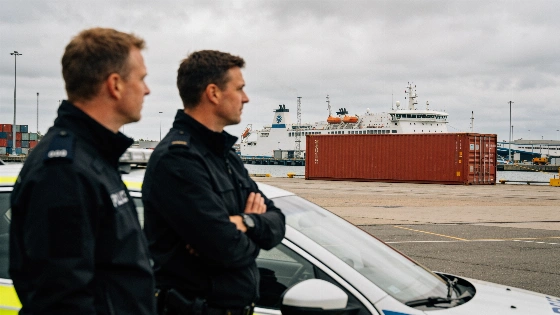
The European Parliament has recognised police, border and customs officers fighting drug trafficking as high-risk professionals. The measure also covers port workers, fishermen and others exposed to violence from criminal networks.
The European Parliament has recognised police officers, border agents, customs officials and other security personnel fighting drug trafficking on the front line as professionals working in high-risk conditions. The resolution was promoted by the Spanish delegation of the Partido Popular and passed without support from the Grupo Socialista. It also brings port workers, fishermen and other exposed groups into a wider European response to criminal organisations.
The European Parliament adopted the resolution on 17 September 2026 by 601 votes to 4, with 5 abstentions.
The resolution does more than recognise the danger. It calls for additional funding, stronger operational resources and greater police and judicial capabilities across the European Union. It also demands closer cooperation between customs services, police forces, courts and administrative authorities.
The geographical scope of the threat sits at the centre of the measure.
The resolution also supports exploring a new EU sanctions framework against drug-trafficking networks. The measures reported in connection with the text include asset freezes, restrictions on financing and visa bans, alongside stronger action against money laundering.
Maritime surveillance is one of the main operational priorities. Parliament calls for better intelligence sharing and closer coordination between Frontex, Europol, Eurojust and the European Maritime Safety Agency. It also wants a stronger role for the Maritime Analysis and Operations Centre, known as MAOC-N. The Renew Europe group likewise identified maritime drug trafficking, stronger intelligence sharing and better enforcement along key routes as central priorities.
Spain's position on Atlantic trafficking routes gives this part of the resolution particular weight. The document also calls for cooperation with third countries, especially in West Africa, Latin America and the Caribbean. The stated aim is to disrupt the entire chain, from production and transit to money laundering and distribution in European markets. An earlier analysis described the growing pressure along the Atlantic routes and the role assigned to Spain in Europe's anti-drug strategy.
The Partido Popular is also pushing for action beyond drug seizures. The resolution calls for tougher measures against corruption, money laundering and illicit financial flows. It proposes better systems for identifying, freezing, seizing and confiscating assets linked to drug trafficking and organised crime.
That financial side matters. Criminal organisations rely on more than transport networks and street distribution. Their resilience also depends on the money that protects their operations and helps them pressure public and private actors. The European approach therefore links security enforcement with judicial cooperation, maritime control and financial investigations.
Recognising police, border and customs work as high-risk employment gives political visibility to the people confronting these networks directly. The resolution's practical demands matter just as much: more funding, better intelligence sharing and the power to dismantle criminal assets. The message is clear. Europe cannot claim an effective response to narcotics while leaving front-line officers and other vulnerable workers exposed to growing violence without giving them the resources and coordinated support their work requires.