Diplomats and experts met in Barcelona to address Europe's security challenges. The debate focused on NATO spending, US policy shifts, and the EU's uncertain defense future. Tensions with Russia and China add to the complexity.
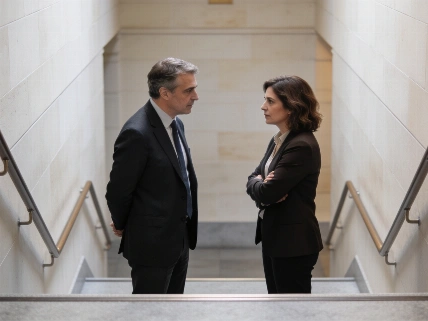
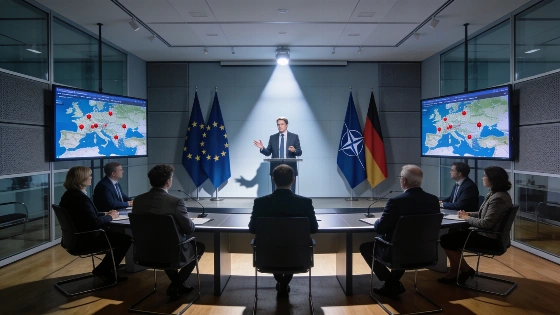
Rising global tensions and renewed pressure from the United States have put European security under the spotlight. In Barcelona, leading diplomats, academics, and policy experts gathered for the VI Geopolitics Seminar, organized by the Fundación Internacional Olof Palme, EL PAÍS, and the Barcelona School of Management at Universitat Pompeu Fabra. The event took place as NATO leaders met in Ankara, where US President Donald Trump renewed calls for Spain to increase its military spending, intensifying debate over Europe's defense commitments.
The seminar opened with Bernat Giral Balletbò, president of the Fundación Internacional Olof Palme, who emphasized the organization's ongoing mission to promote peace and multilateralism, especially after the recent passing of its founder, Anna Balletbò. He highlighted the urgency of such forums in a world marked by more than fifty active conflicts and a weakening of international law and multilateral cooperation.
During the first panel, Mariano Aguirre from the Barcelona Centre for International Affairs (CIDOB) and Lluís Bassets, former director of EL PAÍS Cataluña, examined the most pressing security threats. They pointed to the wars in Ukraine, Iran, and Gaza, as well as the lack of a clear US strategy in the Middle East. Aguirre described Europe as caught between two 'hostile powers'—Russia and the United States—while also facing uncertainty in its relationship with China and the growing influence of the BRICS bloc. Bassets argued that shared security depends on common rules, warning that challenges now extend beyond traditional conflicts to include space and digital domains. He suggested that deeper European integration on security is essential to uphold an international order based on norms rather than force.
Subsequent discussions focused on the European Union's evolving role in global security and the prospects for strengthening national defense. In a panel moderated by EL PAÍS journalist Lluís Pellicer, CIDOB's Carme Colomina, political science professor Rafael Martínez, and security analyst Sonia Andolz debated the EU's strategic autonomy and the possibility of creating a European army. The conversation reflected widespread uncertainty about Europe's ability to act independently in defense matters.
Before the third session, Swedish diplomat Pierre Schori paid tribute to Olof Palme, recalling the late Swedish prime minister's role as a mediator between rival powers. The centenary of Palme's birth will be marked next year. Schori and former UN official Cristina Gallach, in a dialogue moderated by Elena Sevillano of EL PAÍS, discussed the future of the European project, the importance of multilateralism, and the alliances needed to navigate an increasingly unstable geopolitical landscape.
Europe's security debate comes at a time when the continent faces mounting external and internal pressures. The US push for higher defense spending among NATO allies has reignited questions about burden-sharing and strategic priorities. At the same time, the EU's efforts to define its own defense identity remain hampered by political divisions and uncertainty over future relations with major powers like China and Russia. According to the European Defence Agency, EU member states have increased defense budgets in recent years, but significant gaps persist in capabilities and coordination. The ongoing conflicts in Ukraine and the Middle East, along with cyber and hybrid threats, underscore the complexity of the security environment. As the EU seeks to balance transatlantic ties with greater autonomy, the outcome of these debates will shape not only Europe's defense posture but also its role in the global order.