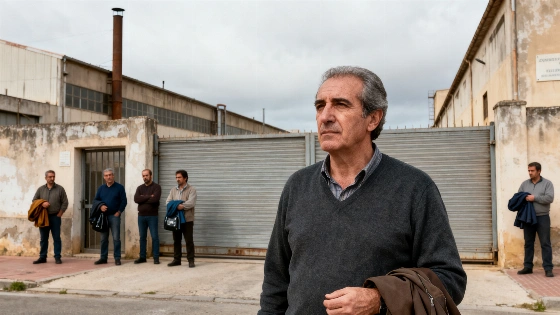
Lagarto Factory in Zaragoza Closes: Production and Workers Relocate to Toledo. The historic Lagarto factory in Zaragoza shuts down after 50 years. Production and staff are being transferred to Toledo, with the future of 30 employees still uncertain. The decision comes as part of the company's restructuring.
The Lagarto factory in the Malpica industrial zone in Zaragoza, renowned for its famous green soap since 1971, is preparing to shut down. The company Euroquímica has announced the transfer of all production to its main facility in Illescas (Toledo), putting the future of about 30 employees — both younger staff and those who have worked at the factory for decades — in doubt.
The decision to close is part of a major restructuring: Euroquímica has officially notified the staff about the start of a geographic mobility procedure, as stipulated by Spanish labor law. For many workers, this means either relocating to another region or searching for a new job. Negotiations between unions and management have yet to begin: as noted by Victor Fortuño, representative of CC.OO. Industrias Aragón, the company has not yet provided the required documentation, and a negotiating group has not been formed.
Half a century of history
The Lagarto plant in Zaragoza opened in the early 1970s and quickly became one of the brand’s key production sites. Since the 1980s, it produced not only the classic soap, but also other household products. Now, after more than 50 years of continuous operation, the facility is closing, and the entire Lagarto product line will be produced exclusively in Toledo.
The fate of the employees remains uncertain: officially, the transfer process is set to begin in the second half of the year, after a three-month period from the time of notification. Unions expect negotiations to start at the end of May or early June. For many families, this decision has been a serious challenge—not only due to the loss of a familiar workplace, but also because of the need to relocate to another region.
Causes and consequences
The story of the Lagarto brand began back in 1914 in San Sebastián, and in 1992 the brand was acquired by Euroquímica, consolidating production in Illescas and Zaragoza. Recent years have been difficult for the company: in 2022 it filed for bankruptcy, in 2023 it emerged from crisis thanks to investments from Tertius Capital, and in 2024 carried out a 20% staff reduction through voluntary redundancies and compensation. The closure of the Zaragoza plant is a logical continuation of this series of changes, driven by rising energy and raw material costs.
For Lagarto's customers, the changes mean that familiar products—from soap to household cleaners—will now be produced only in Toledo. For Zaragoza, this represents the loss of one of its oldest industrial sites and the jobs linked to it over several generations.
The fate of historic businesses in Spain is often a topic of discussion: a similar story recently happened with an iconic establishment in Badalona, when the legendary Serra bar closed its doors after 78 years of operation due to the owners retiring. Such events remind us how quickly the country's industrial and urban environment is changing.
According to Talent24h, the closure of the Lagarto plant is not just a production move, but part of a large-scale restructuring that reflects the challenges facing Spanish industry: rising costs, competitive pressure, and the need to adapt to new economic realities.