Pamplona’s fourth San Fermín encierro lasted just 2 minutes 32 seconds. Several runners suffered hard falls, especially at Mercaderes. The Álvaro Núñez bulls increased the risk and intensity of this year’s festival.
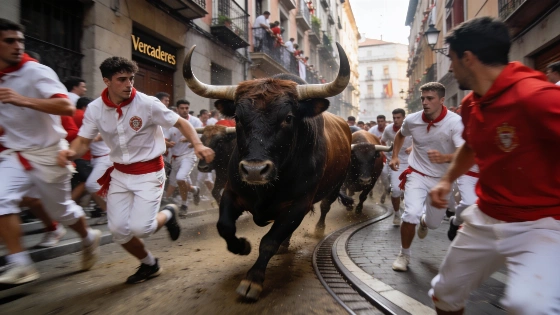
High speed and mounting danger marked the fourth encierro of San Fermín 2026 in Pamplona, as Álvaro Núñez bulls tore through the city’s historic route in just 2 minutes and 32 seconds. The run, the longest so far this year but still extremely fast, saw a series of violent falls and pileups, particularly at the notorious Mercaderes curve. Emergency teams responded quickly as several runners were knocked down or pushed aside by the charging animals, underlining the growing intensity of this year’s festival.
The bulls, including Asustado, Naranjero, and Gavilán, each weighing over 500 kilos, set a relentless pace from the start at Santo Domingo. The herd thundered past the Ayuntamiento, Mercaderes, Estafeta, and Telefónica sections before reaching the bullring. As the starting rocket sounded at 8:00, hundreds of runners—men and women—tried to keep ahead of the powerful animals, but the speed and unpredictability of the bulls left little margin for error. The most dangerous moments unfolded at Mercaderes, where several runners were caught in pileups and suffered heavy impacts.
RTVE continued its comprehensive coverage of the Sanfermines, broadcasting the event live on La 1, the 24 Horas channel, and RTVE Play, with Ana Prada and Julian Iantzi returning as presenters. This year, Egoitz Txurruka joined the team, bringing deep knowledge of the festival, alongside experienced runner Teo Lázaro. Registered viewers can access the dedicated RTVE Sanfermines channel, which streams historical content and live coverage around the clock until July 15, including past encierros dating back to 2008.
Álvaro Núñez Benjumea, who debuted his bulls in Pamplona last year, returned with a renewed sense of anticipation and added pressure. As the direct heir to the renowned Núñez del Cuvillo ranch, his livestock from the Iruelas estate in Facinas (Tarifa, Cádiz) brought a mix of castaño, jabonero, mulato, and colorado bulls, all weighing between 565 and 595 kilos. The diversity and size of these animals contributed to the heightened risk and spectacle of the morning’s run.
This year’s encierros have consistently clocked in at just over two minutes, with each day’s run growing faster and more hazardous. The combination of powerful bulls and dense crowds has led to a series of tense moments, echoing the high-stakes atmosphere seen in previous editions. For context, earlier in the festival, Cebada Gago bulls led a similarly rapid and tense run, which ended without major injuries but kept tension high among participants and viewers alike, as detailed in this report on a previous San Fermín encierro.
The San Fermín festival remains one of Spain’s most iconic and closely watched events, drawing thousands of visitors and participants each July. The encierro, or running of the bulls, is a tradition dating back centuries, with Pamplona’s route stretching 848 meters through the city’s old quarter. Each morning’s run is broadcast live and followed by medical teams stationed along the course, ready to respond to injuries. While the event is celebrated for its excitement and spectacle, it also carries significant risks for runners, especially as the pace and intensity of the bulls increase. The festival continues through July 15, with four more encierros scheduled and safety remaining a top concern for organizers and authorities.