Alberto Núñez Feijóo demands early elections and accuses Pedro Sánchez of being the political link in corruption cases. The opposition leader urges government partners to support a no-confidence motion.
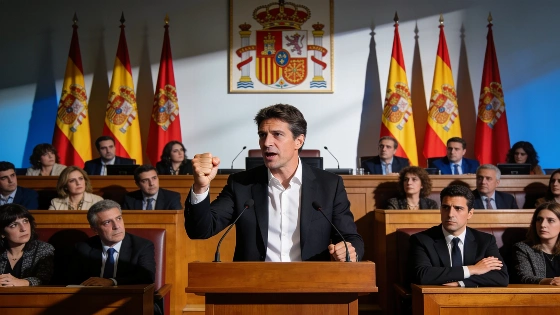
Alberto Núñez Feijóo, leader of the Partido Popular, sharply escalated his confrontation with Prime Minister Pedro Sánchez in Congress on Wednesday. Feijóo accused Sánchez of a complete lack of morality and directly linked him, without presenting evidence, to the corruption scandals affecting the government and the PSOE. The opposition leader insisted that it made no difference whether Sánchez was fully aware of the alleged wrongdoing or not, arguing that those implicated acted because of their connection to the prime minister.
During a tense parliamentary session, Feijóo renewed his call for early elections, asserting that the current government has failed to improve the lives of ordinary citizens and has only benefited its own circle. He demanded the dissolution of the Cortes and immediate elections, intensifying pressure on Sánchez’s coalition partners to consider supporting a no-confidence motion. Despite his strong rhetoric, Feijóo stopped short of formally initiating the process, instead urging government allies to publicly declare their willingness to withdraw support before he would move forward with the parliamentary procedure.
Feijóo’s approach placed the responsibility for any continuation of the current administration squarely on the shoulders of Sánchez’s partners. He argued that those who prefer to maintain a government he described as corrupt and dishonest must accept accountability for prolonging the situation. At the same time, Feijóo distanced himself from the obligation to act, even though the Partido Popular holds enough seats to present a motion independently. His remarks also included criticism of the dignity of the parliamentary groups backing the government, signaling a strategy focused more on public pressure than on building alliances.
This political standoff comes amid ongoing judicial investigations involving figures close to the government, fueling debate over accountability and transparency at the highest levels. The scenario echoes other recent moments of public tension in Spanish politics, such as the controversy described in the article about a bishop’s arrival triggering conflict in the valley, which can be found here. Both cases highlight how leadership disputes and questions of integrity continue to shape the national conversation.
In Spain, a motion of no confidence requires the support of at least one-tenth of the members of Congress to be formally registered, and a majority to succeed. The Partido Popular, as the main opposition force, has the numbers to initiate such a move but would need additional backing to pass it. The current political climate remains volatile, with coalition dynamics and judicial developments likely to influence the coming weeks. The outcome of this confrontation could have significant implications for the stability of the government and the timing of the next general election.