Alberto Núñez Feijóo pledges to introduce a national law granting public benefits to unborn children, mirroring Madrid's recent policy. The move could reshape family aid rules and intensify political debate.
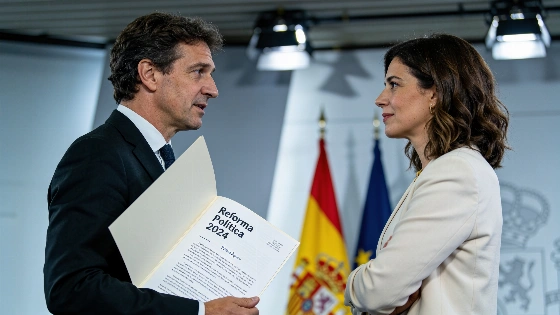
Alberto Núñez Feijóo, leader of the Partido Popular (PP), has announced plans to implement a nationwide law granting public benefits to unborn children if his party comes to power. The proposal, directly inspired by the recent legislation introduced by Isabel Díaz Ayuso's government in Madrid, would mark a significant shift in how family support is structured across Spain.
Feijóo outlined his intentions during an interview on Antena 3, emphasizing that expectant mothers should see their pregnancies reflected in public assistance programs. He pointed to his own record in Galicia in 2011 and highlighted Ayuso's recent initiative as a model for national policy. The Madrid law, approved on July 2 but not yet published in the region's official bulletin, recognizes the unborn child as an individual for the purposes of accessing a range of benefits.
Under the Madrid framework, families become eligible for various forms of aid from the 15th week of pregnancy, provided they can present medical documentation. These benefits include access to school meal grants, high school scholarships, private nursery support, and youth rental assistance. Notably, families with two children are classified as 'numerous' before the third child is born, unlocking tax deductions and public transport discounts earlier than before.
The law also extends fiscal advantages, such as income tax deductions for educational expenses and exemptions on certain housing-related fees, to families expecting a child. The unborn child is treated as a full member of the household for administrative purposes, a move that has drawn praise from conservative and far-right groups while facing criticism from left-wing parties.
Madrid is the first autonomous community in Spain to introduce such broad recognition of the unborn child in public policy. Galicia, referenced by Feijóo, has a similar provision, but it applies only to large families. The Madrid government clarified that, despite some political rhetoric, the administrative recognition begins after the 14th week of gestation, not immediately after conception.
The political context surrounding this initiative is charged. Ayuso's law is seen as part of a broader cultural battle with the left and an attempt to compete with Vox on natalist policies. Miguel Ángel Rodríguez, Ayuso's chief of staff, described the measure as a 'revolution' against progressive cultural trends. The debate over the law's implications has intensified, with supporters framing it as a defense of life and critics warning of its ideological underpinnings.
Feijóo's commitment to extend the Madrid model nationwide signals a potential realignment of family policy in Spain. If enacted, the law would standardize benefits for unborn children across all regions, affecting eligibility for public aid and tax breaks. This development comes amid ongoing tensions between regional and central authorities over social policy, as highlighted in recent disputes such as the standoff over Social Security transfers between Madrid and the Basque Country, detailed in this related report.
Spain's approach to family benefits has historically varied by region, with autonomous communities exercising significant discretion. The proposed national law would override these differences, potentially simplifying access but also sparking new debates over the role of government in family life. As the political landscape evolves ahead of the next general election, the future of Ayuso's model—and its possible nationwide adoption—remains a focal point in Spain's ongoing cultural and policy debates.