King Felipe VI has called for renewed confidence in democracy and global cooperation. Speaking at the Club de Madrid, he warned of rising isolationism and stressed the need for shared responsibility.
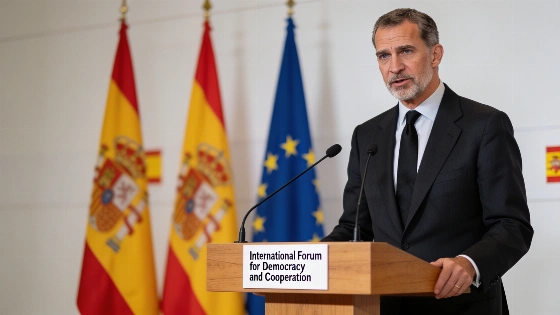
King Felipe VI has issued a pointed call to maintain faith in democratic systems and their ability to foster consensus, especially as international cooperation faces mounting challenges. Addressing the Annual Policy Dialogue 2026 of the Club de Madrid in Madrid, the monarch underscored the urgency of defending democratic values at a time when global trust is visibly eroding and the temptation for countries to turn inward is growing.
During his speech, Felipe VI reflected on the lessons of the twentieth century, noting that the memory of two world wars continues to serve as a warning against abandoning rational, collective approaches. He observed that, despite unprecedented interdependence among nations, many now view this interconnectedness as a vulnerability rather than a strength. The king highlighted that the current climate is marked by a strong pull towards isolationism, with some actors prioritizing material gains and individual interests over rights, freedoms, and the rule of law.
Felipe VI emphasized that the path forward requires rebuilding trust and legitimacy, as well as ensuring accountability in decision-making. He argued that democracies are uniquely equipped to generate these qualities, but warned that their effectiveness depends on the willingness of societies to engage in genuine cooperation. The king called for a renewed commitment to what he described as the "unfinished and monumental task of building a freer, more responsible, and more conscious world." He stressed that this effort is essential not only for alleviating suffering but also for restoring hope and dignity on a global scale.
Protecting global public goods—such as climate stability, health security, ocean protection, food security, and a safe digital environment—was presented as both a moral and rational imperative. Felipe VI warned that the costs of neglecting these areas far outweigh the investments required for prevention, referencing Spain's own 'Estrategia de Política Multilateral para el Desarrollo Sostenible' as an example of national commitment to these goals. He insisted that acting now is less burdensome than facing the consequences of inaction in the future.
The king's remarks come as the Club de Madrid marks its 25th anniversary, bringing together former democratic heads of state and government, as well as experts, to address pressing issues facing democracy and international cooperation. The forum's discussions reflect a broader concern about the fragility of democratic institutions and the need for renewed consensus in a rapidly changing world. This focus on accountability and legitimacy echoes recent developments in Spain's political landscape, where judicial scrutiny and public debate over governance have intensified, as seen in the ongoing investigation involving former Prime Minister Zapatero, detailed in recent court proceedings.
For context, Spain has played an active role in promoting multilateral cooperation within the European Union and the United Nations. The Club de Madrid, headquartered in Spain, is recognized as the world’s largest forum of former democratic leaders, and its annual dialogues often set the tone for international policy debates. The king’s intervention signals a continued commitment to these principles, even as global trends challenge the foundations of democratic governance.