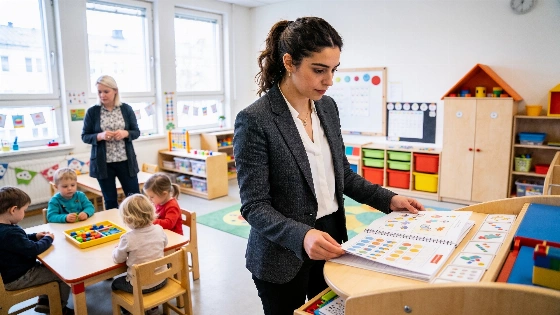
Helsinki has launched a recruitment drive for Spanish early childhood teachers, promising permanent contracts from day one and net monthly salaries between €2,400 and €2,700. The initiative aims to address Finland’s shortage of qualified educators and offers a structured path for integration.
Twenty permanent teaching positions in Helsinki’s public early childhood schools were recently opened to Spanish candidates, with contracts guaranteeing full-time, indefinite employment from the outset and estimated net salaries ranging from €2,400 to €2,700 per month. The campaign, shared by Spanish teacher Andrea Herranz, 26, closed applications on July 31, but its terms have drawn attention across the education sector.
According to the official documentation, the base gross salary for these roles was set at €3,224 per month, with additional experience-based bonuses of 3% to 8% and paid vacation. Teachers would work 38 hours and 15 minutes per week, typically in shifts of around seven hours and forty minutes per day. The package also included healthcare, €550 annually via ePassi, and ongoing language support. While Helsinki provided initial accommodation and assistance with essential paperwork, candidates were responsible for their own travel and early living costs, though EURES mobility support was available in some cases.
Selection Without Spanish-Style Exams
Unlike Spain’s competitive public sector exams, Helsinki’s process did not require an opposition exam. However, selection was far from automatic. Applicants needed a degree in Early Childhood Education, the right to work in the EU or EEA, and strong English skills. While Finnish was not required at the application stage, candidates had to commit to several months of language training, ultimately reaching B1 level before signing a contract. The process also demanded official recognition of qualifications, a clean criminal record, and a certificate ruling out respiratory tuberculosis. The Finnish National Agency for Education could impose compensatory measures if training gaps were identified.
Timeline and Integration
The recruitment calendar was tightly structured: language courses began between September and October 2026, progressing through A1 and A2 levels to B1. Successful candidates would relocate and start work in August 2027. Recognition of foreign qualifications typically took three to four months and cost €495, with some financial support available from EURES and the city. Candidates also had to cover part of their relocation expenses upfront.
Why Helsinki Looks Abroad
Helsinki has been recruiting early childhood teachers from abroad since 2024 to address a persistent shortage of qualified professionals. The first phase brought six Spanish teachers into Swedish-language schools, followed by a larger intake for Finnish-language institutions. Finland’s six largest cities plan to hire around 8,000 qualified educators by 2032, reflecting a long-term strategy rather than a one-off campaign.
The appeal of the Finnish model, as highlighted by Andrea Herranz, lies in its emphasis on play-based learning, outdoor education, and professional autonomy. Helsinki’s approach values low student-teacher ratios and close collaboration with families and specialists. These features have made the offer particularly attractive to Spanish teachers seeking new opportunities abroad.
For those considering international teaching roles, it is crucial to verify that vacancies remain open on official EURES or employer portals, as conditions and deadlines vary. The structured integration process in Helsinki stands out for its clarity and support, but similar opportunities may arise in other European countries. Meanwhile, broader research into youth well-being, such as the findings on early smartphone use and mental health risks discussed in this recent analysis, continues to shape debates on education and childhood development across Europe.